One Room Challenge Week 2 - It's All About That Paint

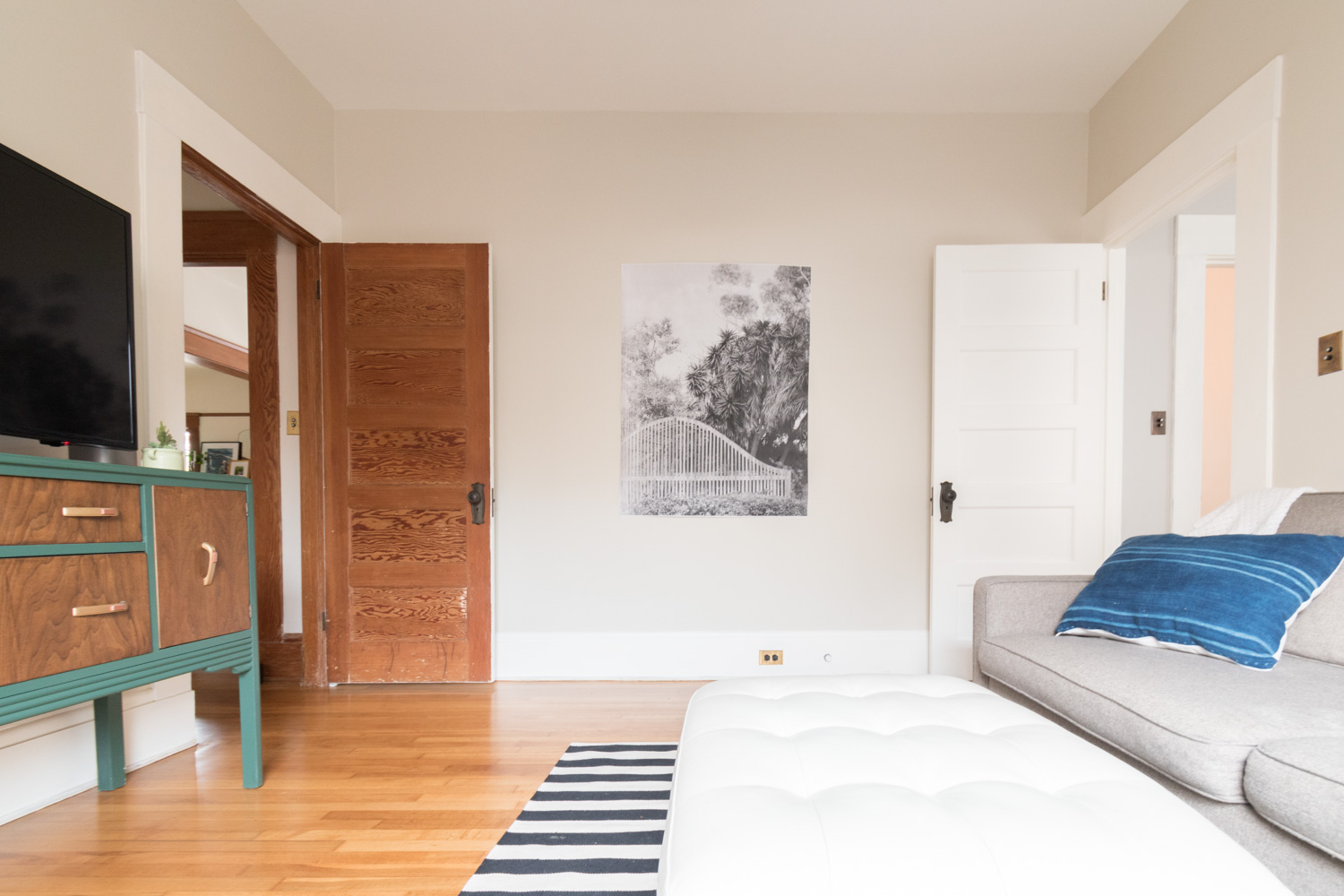
The biggest transformation for the One Room Challenge's makeover of the den/guest room is the paint. And we're getting into it first!

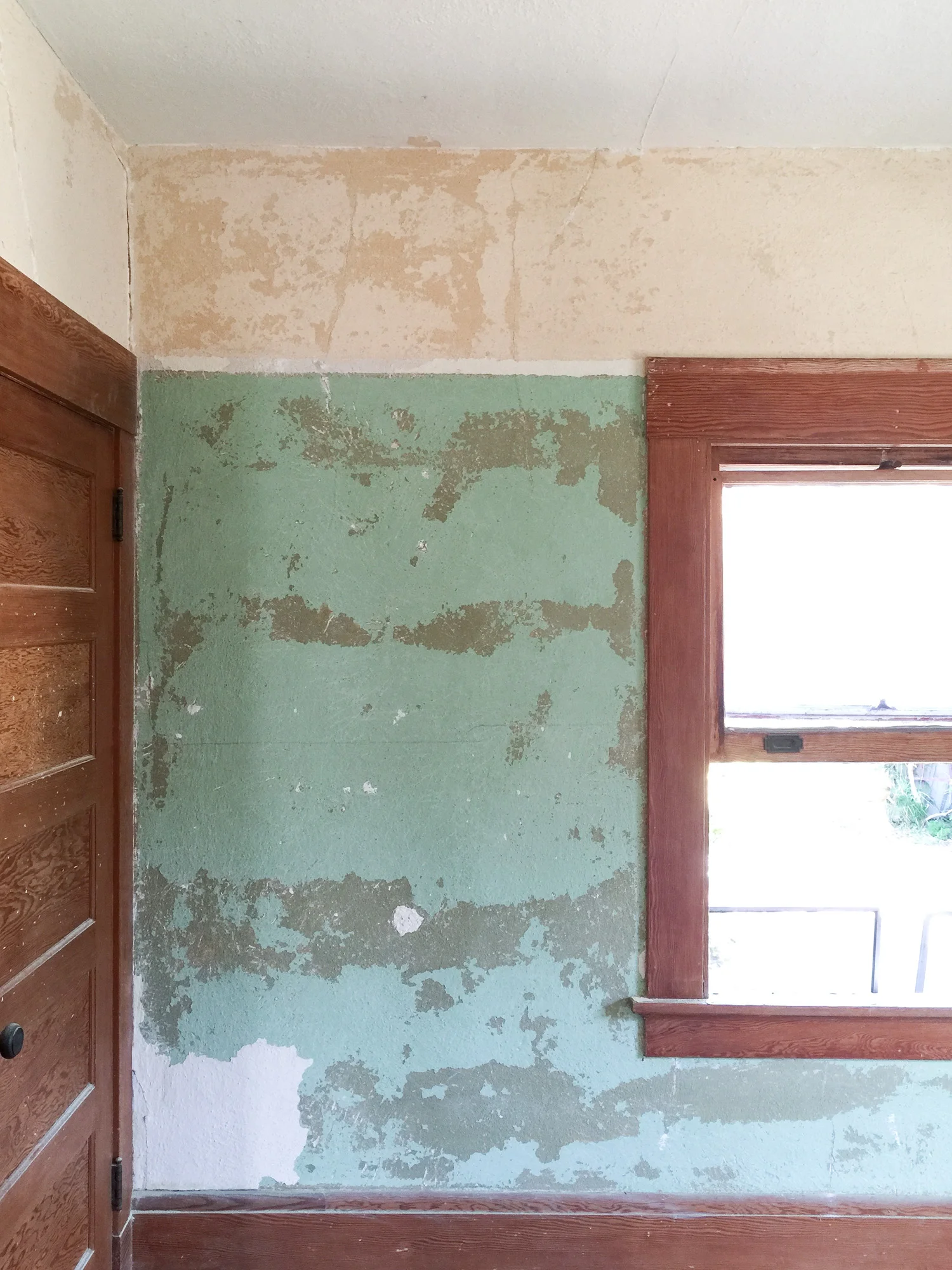
I had loads of inspiration and lists of paint colors that had been used successfully in multiple spaces. I was trying to marry the wall color with the blue velvet couch that I planned for that room to give it a dark-on-dark upgrade without making the room look monochromatic. As a reminder, here's the before, inspiration, and design plan.
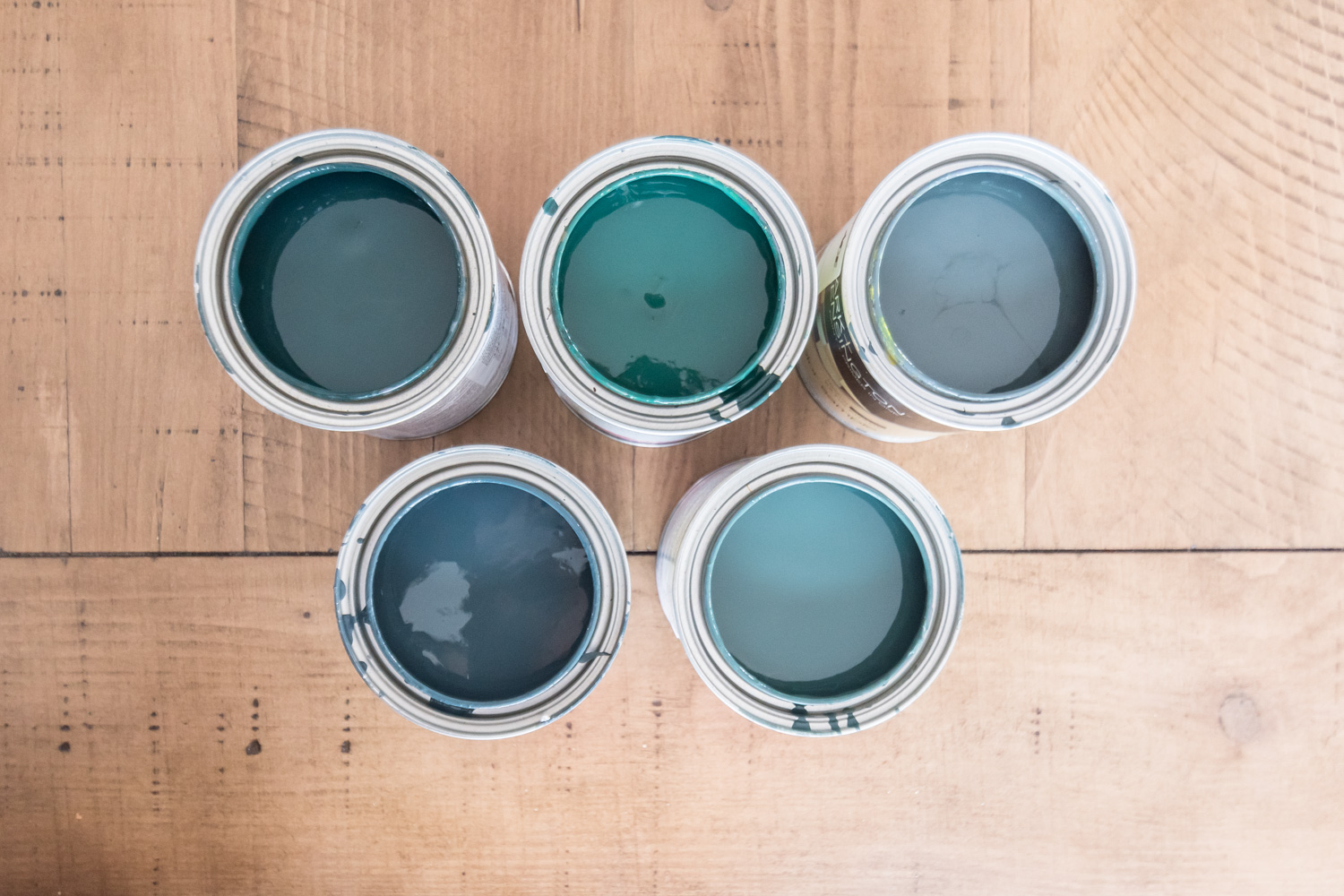
Clockwise from upper left we have Salamander by Benjamin Moore, Hunter Green by Benjamin Moore, Pine Grove by Clark + Kensington, Tarrytown Green by Benjamin Moore, and Narragansett Green by Benjamin Moore.

I painted swatches on the back of a foam core presentation board, since I already had it on hand (I use it as a reflector for photos) but you could instead buy the paint sample boards at the paint store. I was quick to rule out a few colors, then painted my favorites on the wall. By the end, Salamander won our vote.
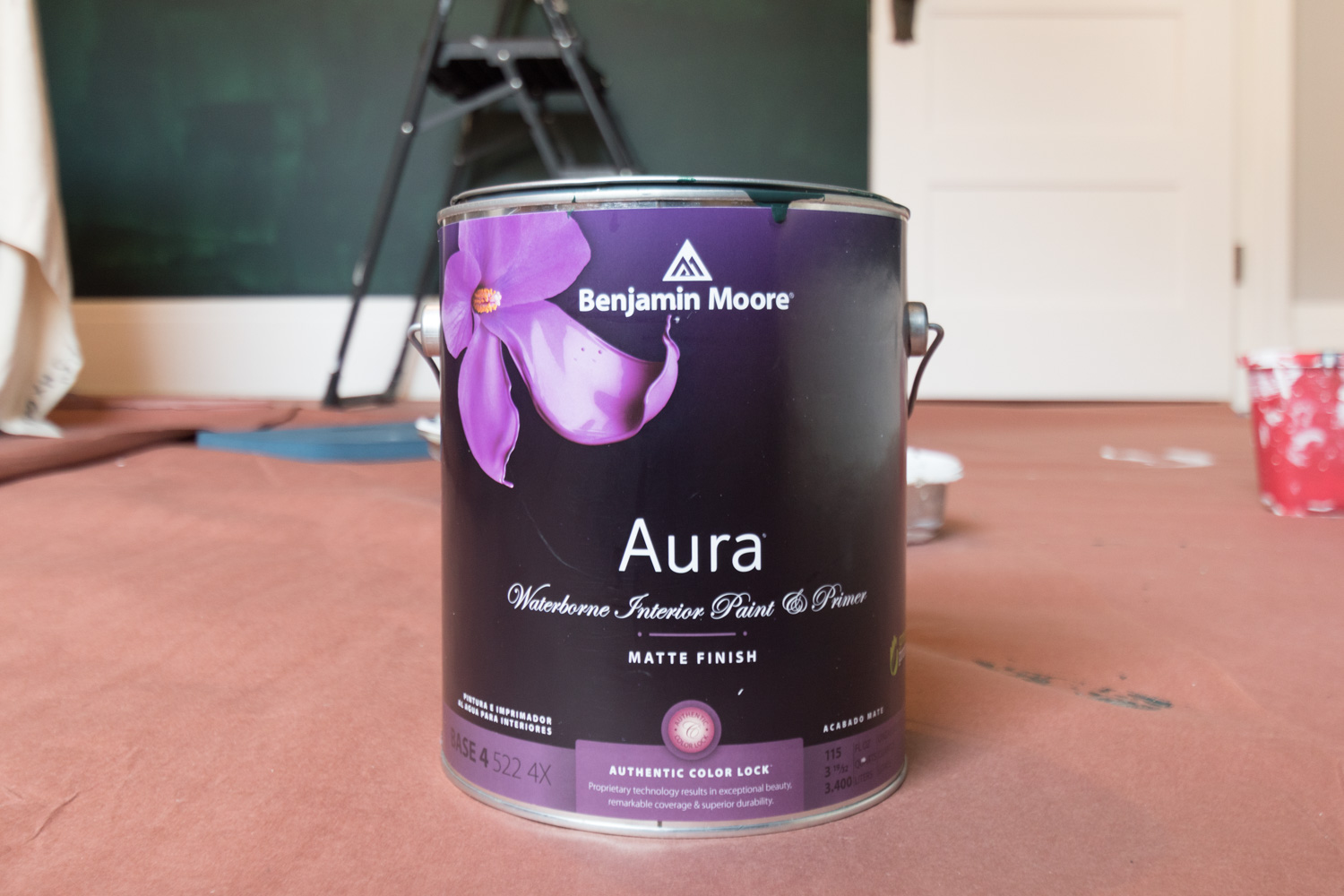
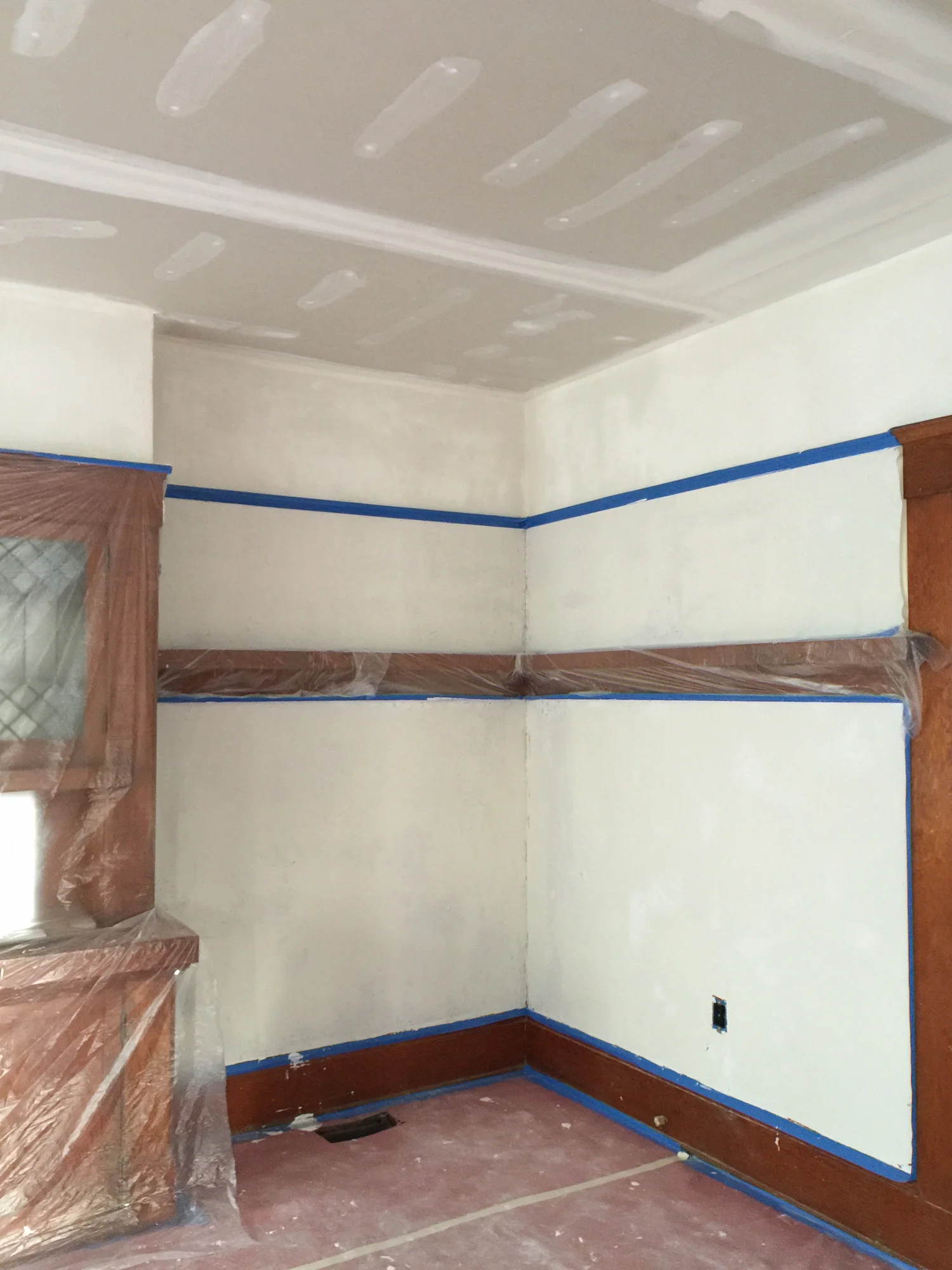
While rolling on the paint in broad strokes provides immediate satisfaction, my painting specialty is cutting in the edges. I don't use blue tape to get crisp edges, rather a steady hand and some trusty tools.

I use the HANDy Paint Cup whenever painting edges, when I need to be more mobile than a gallon of paint allows, or when I'm working with small amounts of paint. This convenient tool fits in your hand, has a magnet to hold the brush, and cleans up so easily (just let the paint dry in the cup, then peel it off - so satisfying!).

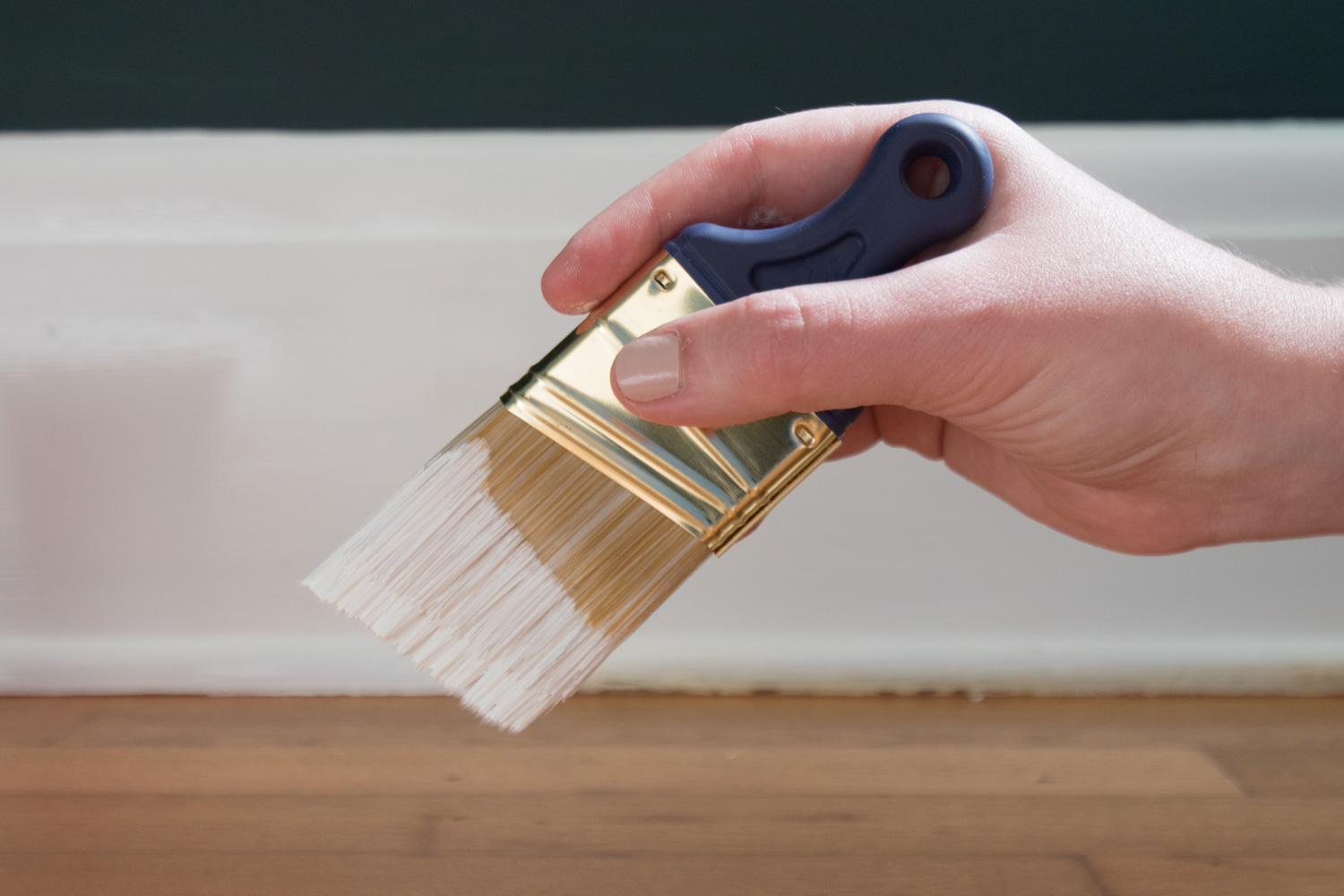
The Wooster Shortcut paint brush is perfect for cutting in. I'll use almost any 2" angled brush for the job, but this lil' one is so comfy with its rubber handle.
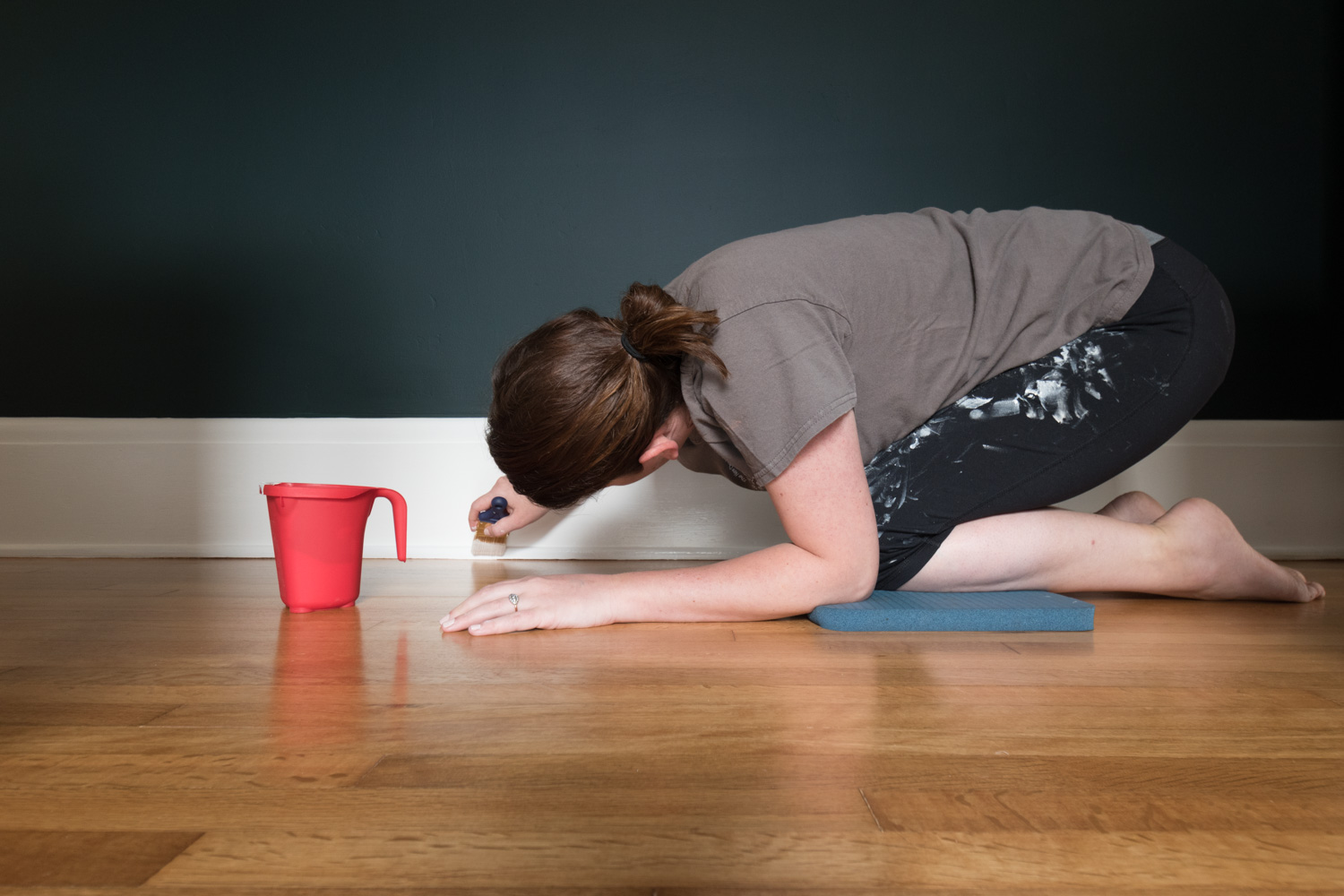
When scooching around on the floor to paint the edges on the baseboard, a kneeling pad is a must. I use it for gardening, painting, tiling, etc. While I don't think you'll find this crouched painting position recommended on HGTV, it works for me.

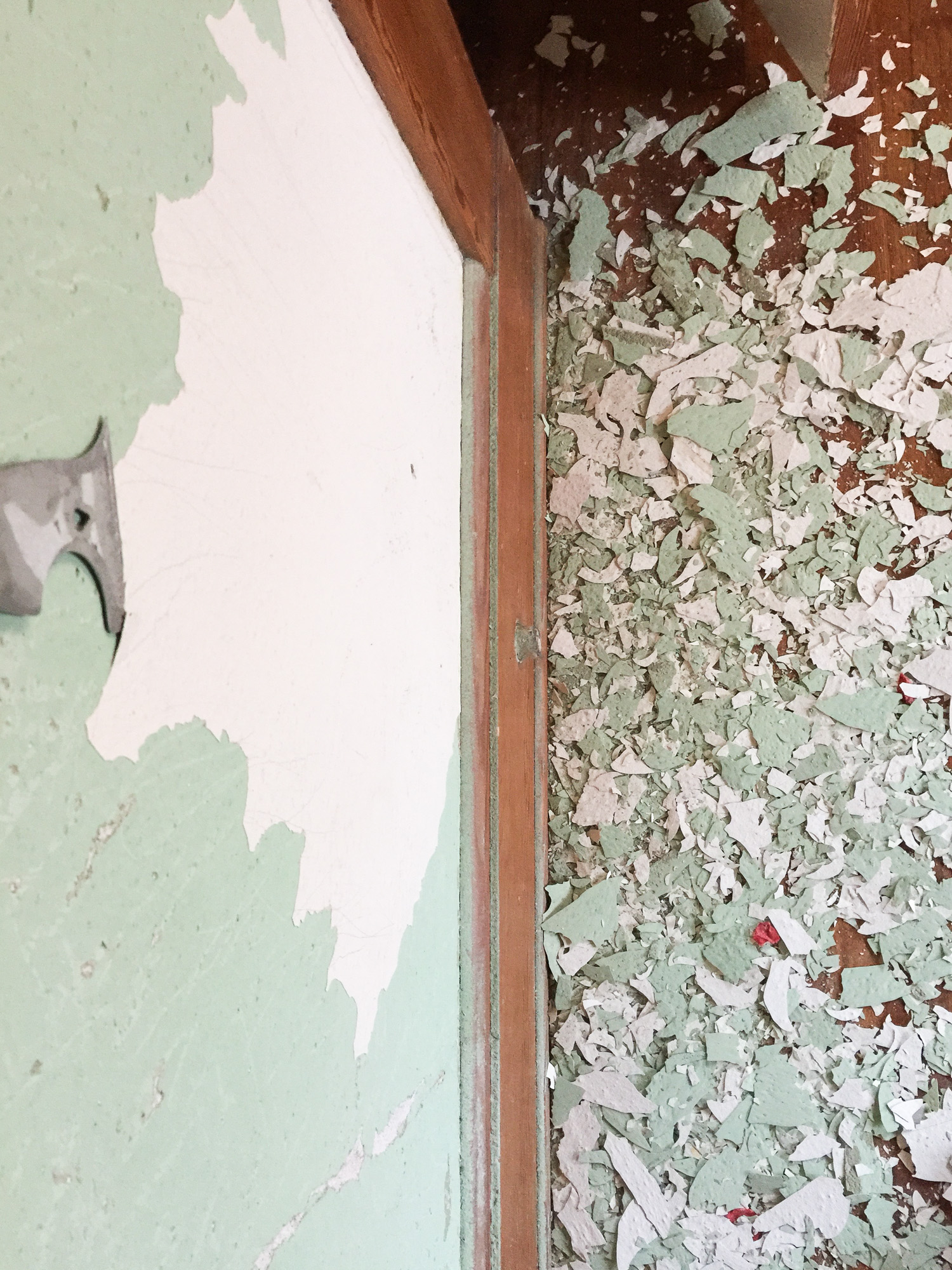
In addition to the walls needing a couple of coats of paint, the baseboards hadn't been touched since before the floors were refinished. They were scuffed up from the sander and I just left them like that for two years. A nice coat of Benjamin Moore's Simply White was all they needed to look their best. The baseboard, three doors, and a window all needed some paint love. Lucky for me, I had the S-Town podcast to keep me company during the hours and hours of painting.

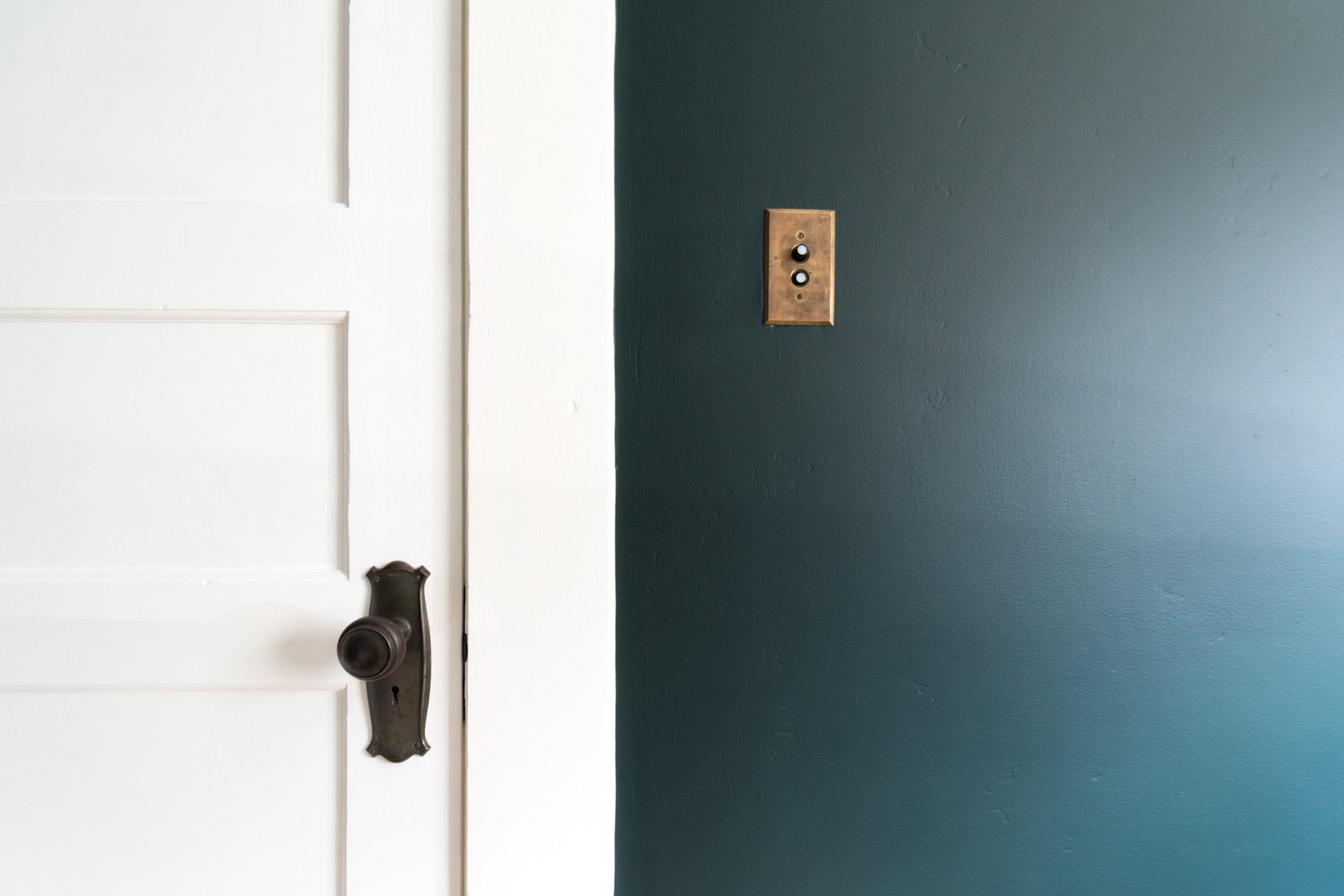
After a weekend's worth of cutting in, I'm swooning over the freshly painted room. The green is so pretty and has a velvety look when the light hits it mid-day. At night, it's nearly black - which is just what I was going for.
Next week, I'm tackling the picture rail moulding installation! Come back over the next few weeks as this room gets a total overhaul. Don't forget to admire the work of the featured and guest bloggers participating in the One Room Challenge!

If you're here because of the One Room Challenge, I hope you'll subscribe to the blog to get future blog posts in your email! Be sure to follow along on Instagram, too!

One Room Challenge progress:
Week 1 - the before, the inspiration, and the plan
Week 2 - paint, paint, paint
Week 3 - how to install picture rail molding
Week 4 - sourcing the artwork
Week 5 - refreshing a chair
Week 6 - the reveal!

Weekly Roundup

Who finished Big Little Lies? That show was so good. The apartment featured in the final episodes is on the market! The seashells lined up on the end of the bed isn't my fave design element, but the Monterey setting is so pretty.

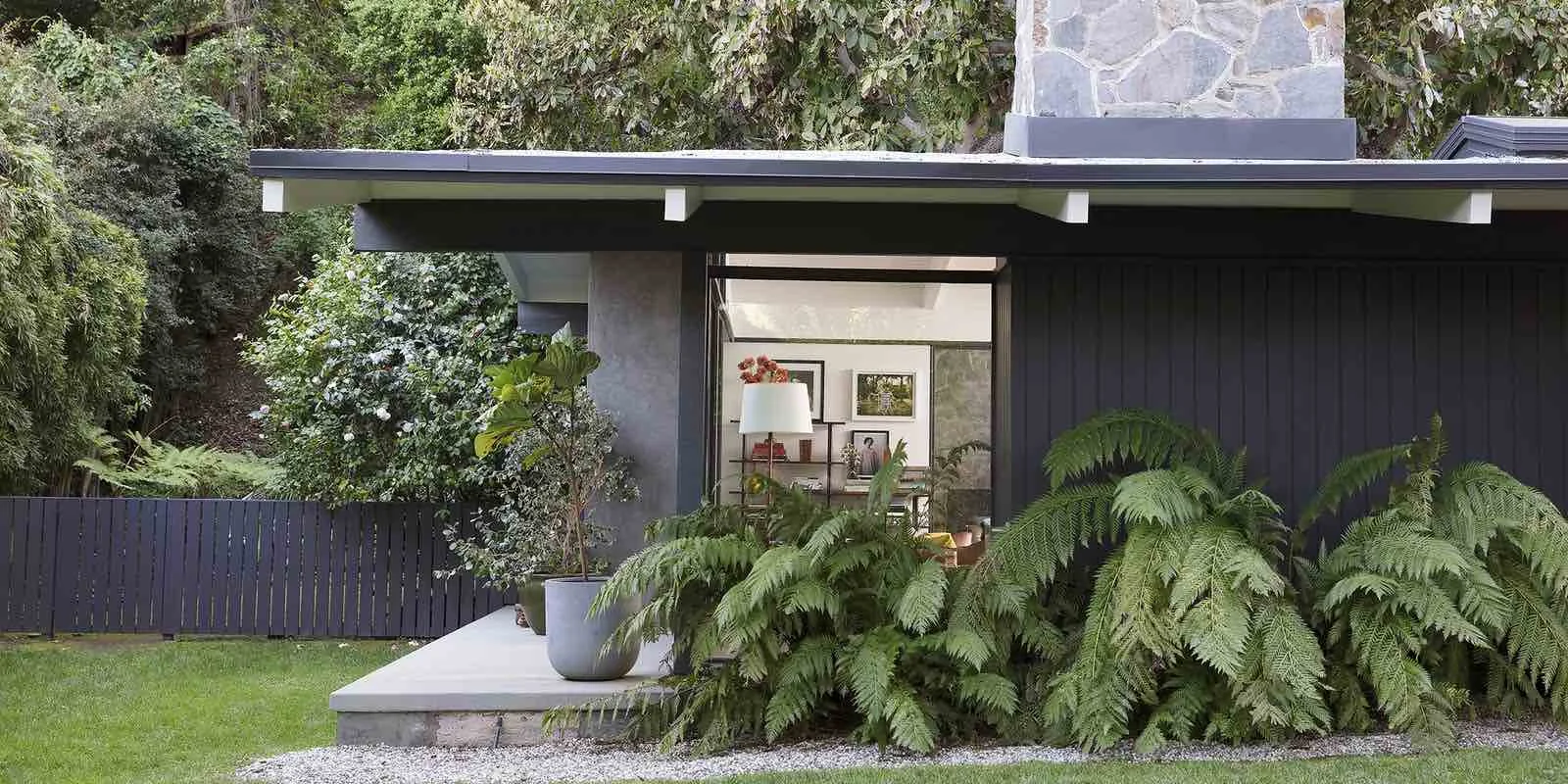
Speaking of that show, Laura Dern's home was featured on Architectural Digest. Is it any surprise that the black exterior and the greenery has me all heart eyes? Did you see Laura's show Enlightened? I love/hated her character in that series. It's well worth a watch.

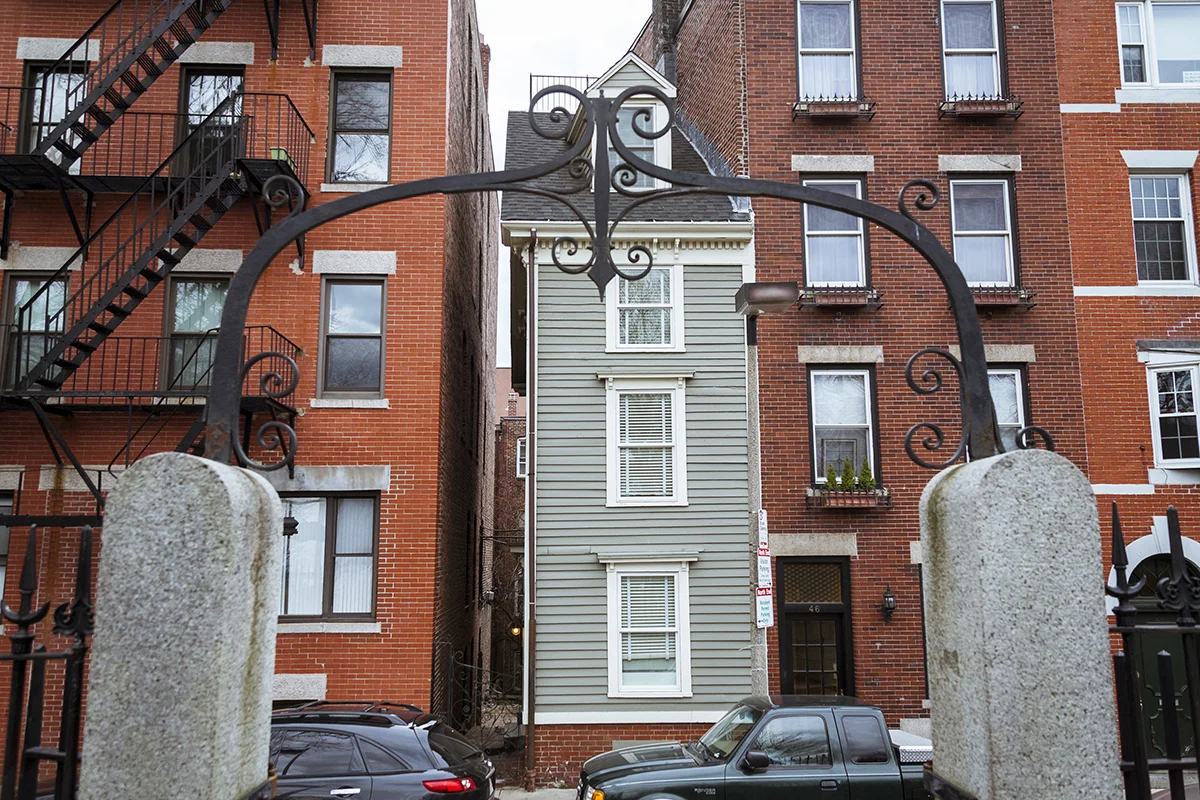
If you aren't interested in buying an apartment on the beach in California, how about a 10-foot-wide house in Boston? The Skinny House (aka Spite House) is for sale for $895k.

I can't wait to tune into this new show hosted by Amy Poehler and Nick Offerman! They are actively casting, so apply now if you're a crafter.

This week, the One Room Challenge is on my mind. I'm participating, but I've also been sucked into exploring all of the transformations-to-be. Have you checked out the featured and guest participants in this season's challenge? There are nearly 300 bloggers participating - wowza! 

This weekend I'll be doing lots of painting for the One Room Challenge. Hope your weekend is just as thrilling!

One Room Challenge Week 1 - A Moody Makeover

I'm currently digging moody colors. Deep blues, forest greens, and dark grays are all I'm pinning as of late. I mentioned a few weeks ago that I was contemplating painting my kitchen cabinets (again!) to give them a deeper hue. Since it's not the best use of my time, I've directed my color affection to another space. Luckily, the One Room Challenge is starting at the perfect time to scratch the moody color itch! Scroll through to see the room I'll be transforming over the next six weeks.

If you found me through ORC, welcome! I'm Ashley and for the past two years I've been restoring a craftsman bungalow in San Diego, CA. Learn a touch more about me here, and preview the before-and-after room transformations here.

Without further ado, here is the inspiration.

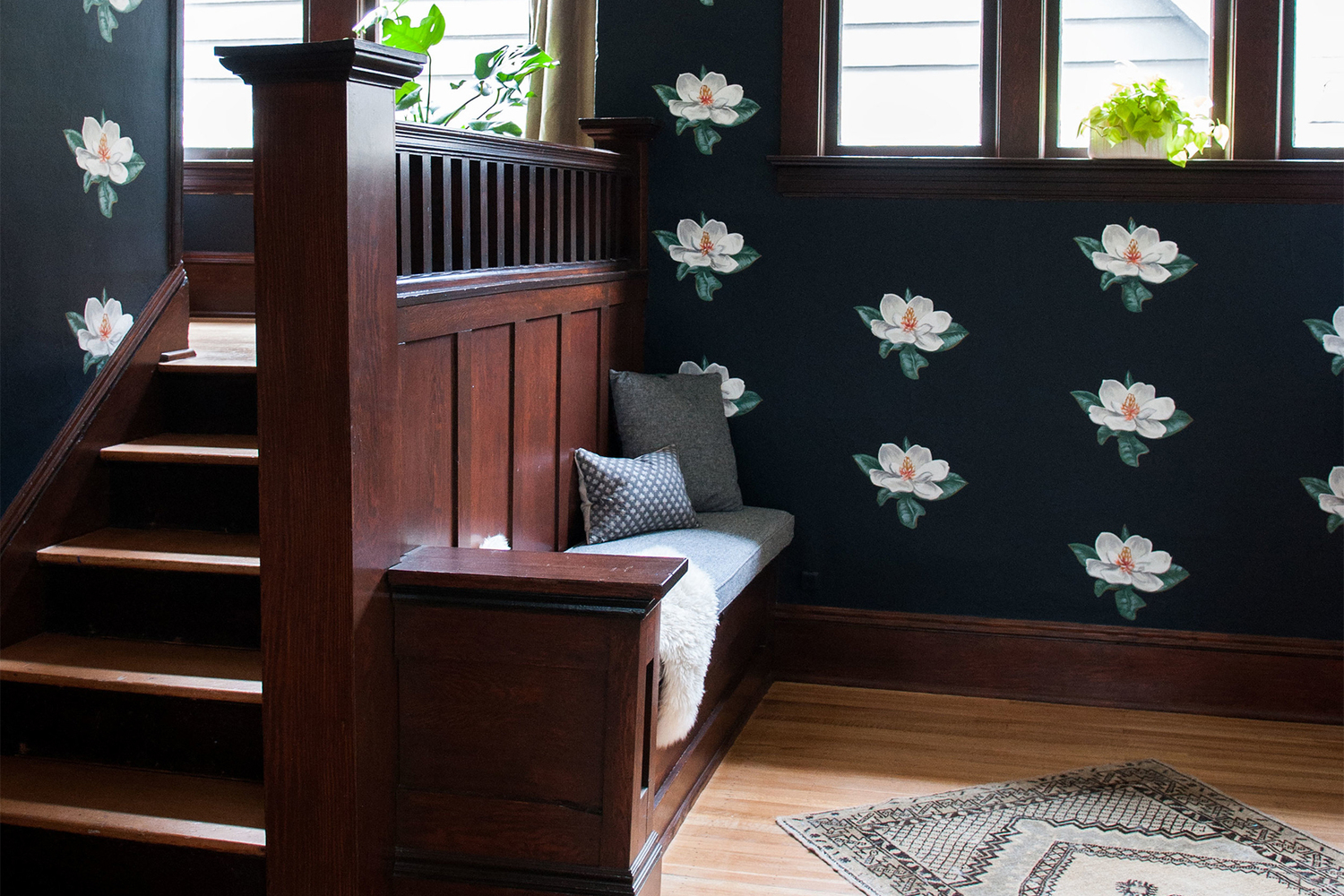
See where I'm going? What I particularly love about these spaces is how they play with dark on dark tones. Studio McGee's emerald couch against the navy walls and Julia's black sofa on the deep green are what moody dreams are made of.

So which space will earn its dark makeover? The family room/den/media room. What is a good name to call a space that we pretty much use only to fold laundry and watch TV in? The internet tells me that an alternate to the word "den" is "snug." I kinda like it. Please weigh in.

This room has received little to no love over the past two years. 100% of the furniture pieces were brought from our rental, so I've grown tired of them. The paint color is a reject color that I bought for our master but didn't like once painted on all of the walls. (lesson learned: paint BIG swatches before you buy a gallon of paint). Also, the trim never got its final coat of paint. 

The Gold Hive One Room Challenge Week 1

The room is fine, but it could become the dark hued space of my dreams. I'm looking forward to spending the next six weeks transforming it. I hope you'll stay tuned and check out the featured and guest bloggers participating in the spring 2017 season of the One Room Challenge!

One Room Challenge Mood Board - The Gold Hive

Sources: couch / rug (one of a kind) / lamp / pillow / chair (existing) / chair fabric / credenza (vintage) / painting

If you're here because of the One Room Challenge, I hope you'll subscribe to the blog to get future blog posts in your email! Be sure to follow along on Instagram, too!

One Room Challenge progress:
Week 1 - the before, the inspiration, and the plan
Week 2 - paint, paint, paint
Week 3 - how to install picture rail molding
Week 4 - sourcing the artwork
Week 5 - refreshing a chair
Week 6 - the reveal!
Bathroom Plans

Last week I shared some of the inspiration for our bathroom. The collection of images made a few must-have elements pretty clear: subway tile with dark grout, moody walls, hex tiles, marble, and period-appropriate finishes.

The Gold Hive Bathroom Mood Board

SOURCES: paint / medicine cabinet (ours is original) / faucet / hex tile / sconce (ours is vintage) / cabinet latch / pendant (ours is vintage) / register (ours is vintage) / subway tile / grout / console sink

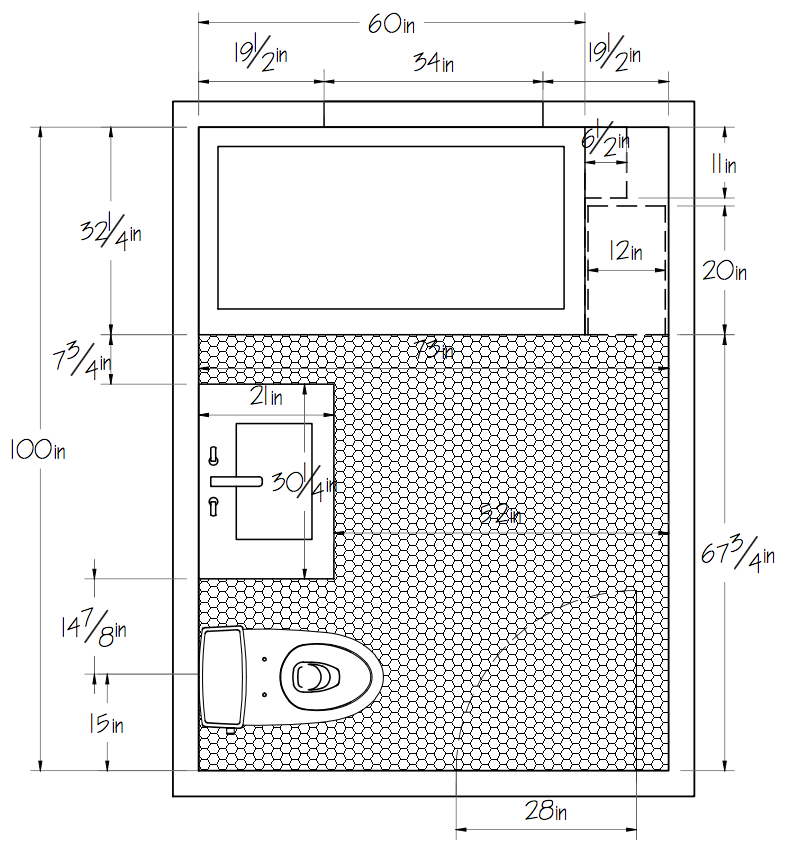
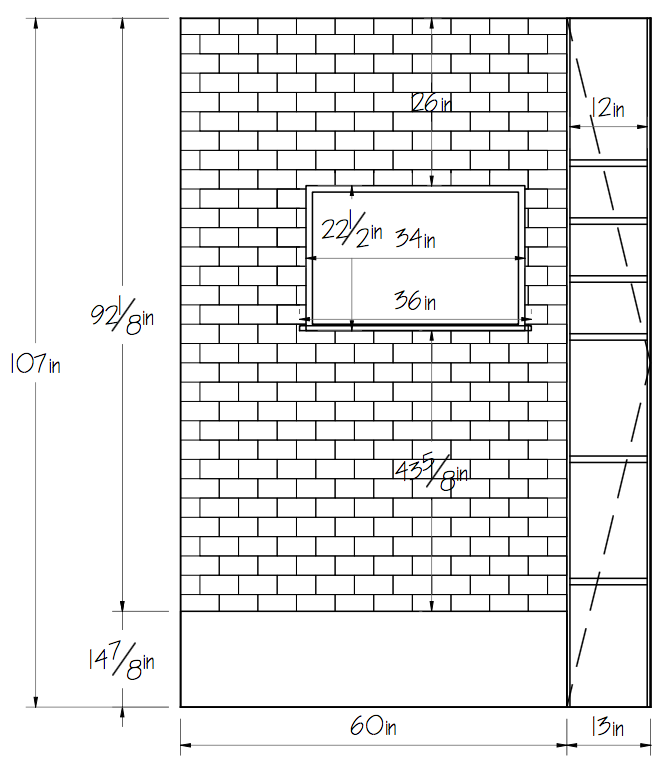
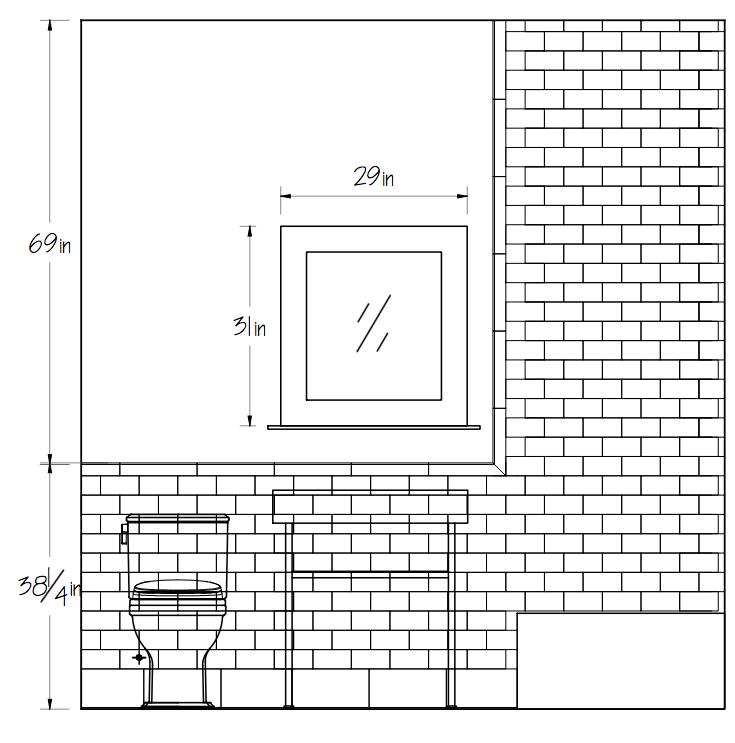
We had a pretty good idea of the plans for the bathroom, but small tweaks were made over the course of the renovation. The below designs were drafted early on, so don't take these measurements as an exact blueprint of the finished product. Rather, a starting point for where we were headed.

The Gold Hive Bathroom Plan View

The layout of the existing bathroom had no reason to be changed. I like having the toilet tucked in the corner, the sink has ample room around it, and the tub configuration allows for storage at the foot of it. Many bathrooms like this are only 60" wide which gives the tub just enough room to fit wall to wall. Since we had another foot of space, we could have gotten a longer tub to stretch the length of the room, but we opted to make two spots for storage, seen in the upper right corner of the above image. The little square that measures 6.5" deep is accessible from the shower. A perfect place to nestle bottles of shampoo without having them on display.

The Gold Hive Bathroom South View

The 13" space on the right is a cabinet for toiletries, refill bath products, cleaning supplies, and more. I think it's my favorite feature in the whole bathroom.

The window shown here is a sizable improvement from the existing one, but we ended up going even bigger!

The Gold Hive Bathroom East View

Because the sink is floating in between the toilet and the tub, I didn't want a traditional vanity. I think vanities are really pretty when they look like built-in cabinetry as an extension of a wall. But on their own, vanities can look like boxes floating in the middle of a room. Thus, we opted for a console sink that visually opens the space. Sure, we gave up storage, but I'm a-okay with that. Neither Ross nor I own a lot of products for primping, so the storage at the end of the tub is perfectly adequate for us.

Other than a few tweaks, those are the plans for the bathroom! If you want to jump two years into the future, you can see the finished bathroom here and here and here.

For more bathroom progress, click the link below then subscribe so you don’t miss out when I add a bathroom in 2019!

Check Out All of the Bathroom Renovation Posts

Weekly Roundup

I've already mentioned that I love touring houses, but I also just love looking at listings online. While scanning listings just outside of the San Diego area (I have dreams of owning a cabin in the woods) I found this cute a-frame and so desperately want to buy it just so I can paint it black!

So many fresh blossoms are coming out with the new spring air. Here are a few books to get you in the floral mood if your neighborhood isn't seeing the wildflower super bloom like Southern California is experiencing.

One of my favorite shows of yesteryear is coming back! TLC's Trading Spaces had its fair share of wacky room renovations, but I adored every second of it. I tried so hard to convince my mom to let us go on the show but she was smart to steer clear of Hildi and her living room filled with sand.

I couldn't agree more with the slow decorating method. Although I get antsy when corners of the house aren't put together and want to buy all the things, I'm glad to have the space (in the house and the wallet) to pick treasures up as I find them.

I wish I loved my water heater as much as this little girl!

Cheers to the weekend! What do you have planned? I have the spring cleaning fever and want to get rid of everything I don't love (à la Marie Kondo). Next week on the blog: the bathroom!

Hashtag Bathroom Inspo

You asked for it, so the bathroom remodel is next to share!

Since we were putting a new bathroom in an old house, I wanted the design to pay homage to the old house charm. I'll never know what the original bathroom looked like before we got our hands on it, so the design options were vast. Should I do classic black and white or colored tiles? Bold or understated? Authentic period pieces or reproductions? Simple or a bit more eclectic? Entirely vintage or a mix of old and new? Minimal or snazzy?

Here are a few of the spaces I took inspiration from when designing our bathroom.

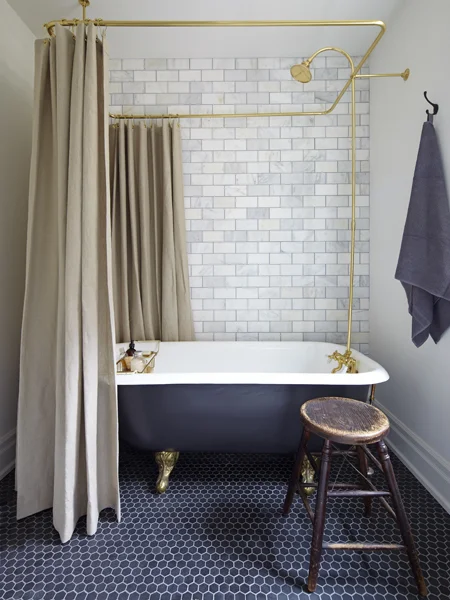
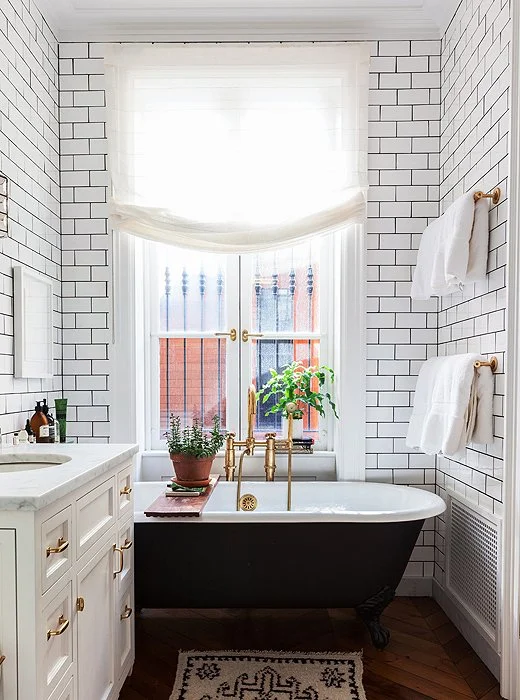
I love how soft yet high-contrast this feels. A clawfoot tub is also oh-so-dreamy. We ultimately weren't able to incorporate a clawfoot soaker in our bath remodel, but maybe there will be room in the next bathroom that we hope to add on.

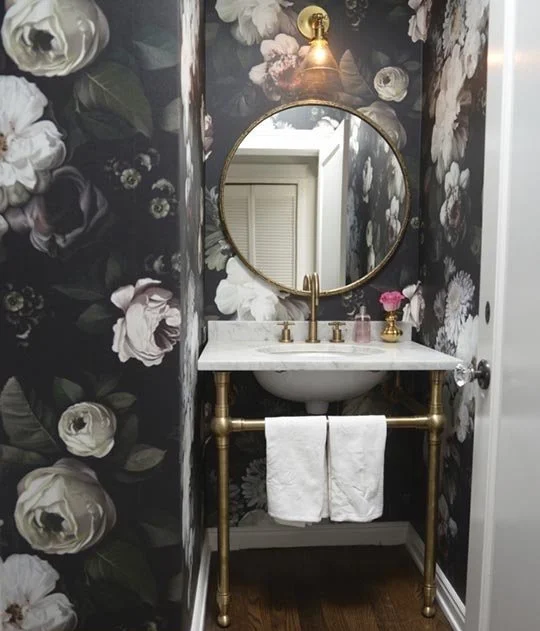
Don't even get me started on my love for floral wallpaper. This Ellie Cashman paper is gorgeous. The pedestal sink is such a perfect way to show off wall details.

Source: Clay Squared

Source: Clay Squared

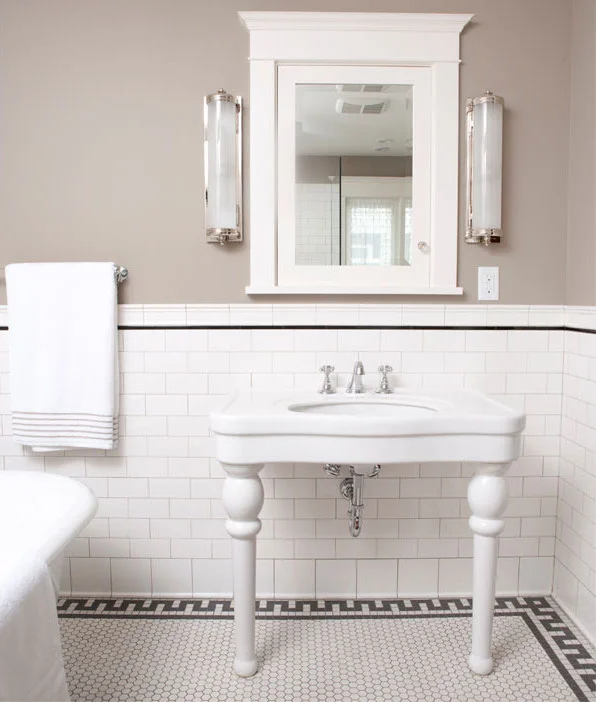
This sink with the look of turned legs is so quaint in the best way possible. The tile is understated but filled with detail. There's hex, a variation on greek key, a pencil liner, decorative cap, and subtle cove base tile. The chair-rail height tile surrounding the whole room was a must-have on my list.

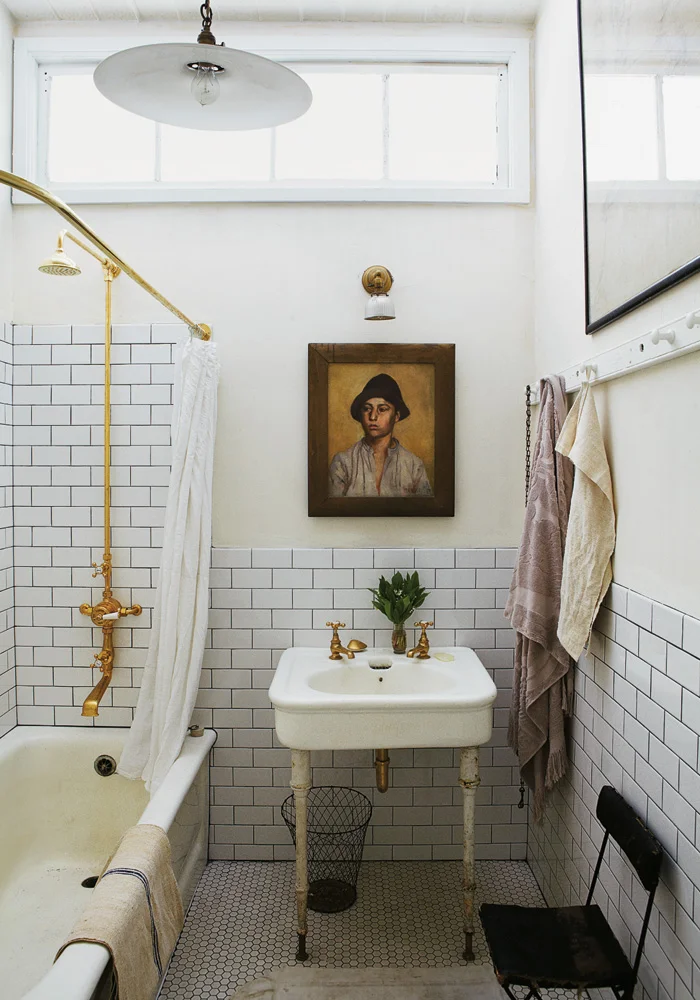
A painting in lieu of a mirror is fine by me. The tile work here is far simpler than the detailed profiles above, but it exudes character. I adore how the aged sink legs and worn tub coexist with the new hardware.

That window is perfectly gigantic. If privacy were no issue, I would have installed a window the full size of the wall.

That retro green tile is to die for, but it's all about that recessed soap dish.

Source: Unknown

Source: Unknown

The moody wall color was definitely a feature worth stealing. I think I need to add more artwork, though, because this is the bee's knees.

Why do moody walls when you can do a moody ceiling? I love how this bathroom has a bold and modern feature without sacrificing the traditional tile. 

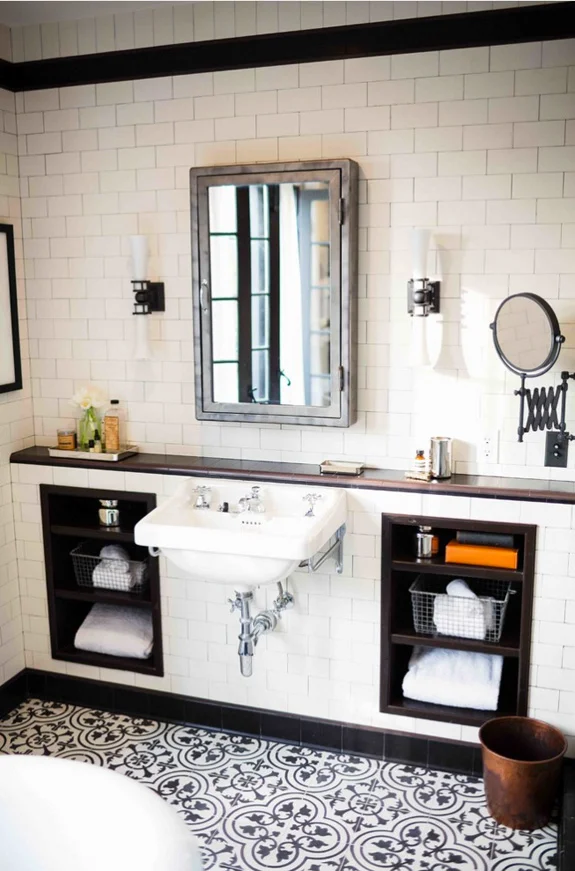
Storage is key in small bathrooms, so why not borrow space between the studs for recessed cubbies? Our final bathroom design allowed for this, but in a slightly different variation.

I borrowed an element from each of these bathrooms, and the many others on my Pinterest board to create the bathroom that's perfect for us. Stay tuned!

Check Out All of the Bathroom Renovation Posts

Weekly Roundup

Domino compiled a collection of some gorgeous wallpapers for spring and I think this floral one from Sandberg Wallpaper's Brunnsnäs Collection is my favorite. 

On Wednesday, I shared the story of our floor refinishing. We hired the job out, but it's totally DIY-able. Cathy and Garrett of The Grit and Polish did it by themselves and boy, do those floors shine!

Last week, I asked you to weigh in on whether or not I should re-paint the kitchen cabinets a deep green. The votes are split, so I don't know what my plan is, yet. With color on my mind, I was taken aback by this house in a nearby neighborhood that hit the MLS this week. Wowza!

Colorful-house-in-golden-hill

Michaels is having a killer sale on frames right now, including online. Alternatively, if you need custom framing, here's $10 off your first order at Framebridge.

I've watched every.single.one of Casey Neistat's videos, so I've developed a crush on his wife and her entrepreneurial, no-nonsense, sarcastic spirit. Resource Magazine featured her so I can't wait to get my hands on a copy. I searched all around town for the latest edition but couldn't find one, so I read the preview online. Candice and Casey are each highly driven makers - truly inspiring for this couch potato.

I'm not a big clothing shopper, but I did get some new shoes this week. I've been wearing Birkenstock clogs for ages so these are a major upgrade in the style department. And yes, those are technically men's shoes, but so what - plus, my feet are too big for lady shoes. 

We went to the movies for the first time in probably two years (I've mentioned I'm a homebody, right?) to see Get Out. It was exceptional. I can't stop thinking about it, and I can't stop listening to this Childish Gambino song that was featured in the film. Speaking of songs in movies, I'm also digging this song by Michael Kiwanuka which plays during the opening of the show Big Little Lies.

Spring has sprung so the front yard is gaining new blooms. San Diego is still getting much-needed rain which is making the fresh plantings very happy. The Arabian lilac is one of my favorite new plantings with its half-purple and half-green leaves.

Happy Friday!

Refinishing Our 100-Year-Old Oak Floors

The Gold Hive Master Bedroom Floors

Refinishing the hardwood floors was the last step in remedying the odor issue. Once all was said and done, the smell disappeared and the flooring was revived – win win!

As a reminder, here’s what the flooring looked like.

flooringbefore

The 100-year-old rift and quartersawn white oak was actually in pretty great condition throughout most of the house. However, the urine stains (the dark spots seen above) and termite damage warranted repairs. Plus, there's no better time to restore the floors than when not living in the house - you’d have to move eeeeeeverything out off the floors otherwise.

The very first step was to make a mess. All drywall, painting, and bathroom construction (stay tuned!) occurred before the flooring crew set foot in the house. There's no sense in making that oak perfect and shiny, to then drag a bag of demo debris over it. I've heard professional painters say to paint after floor refinishing because dust can get into the paint, but I sided with the hardwood guys that said to paint first. It makes so much more sense, I mean, I've been known to drop a cup of paint from the top of a ladder.

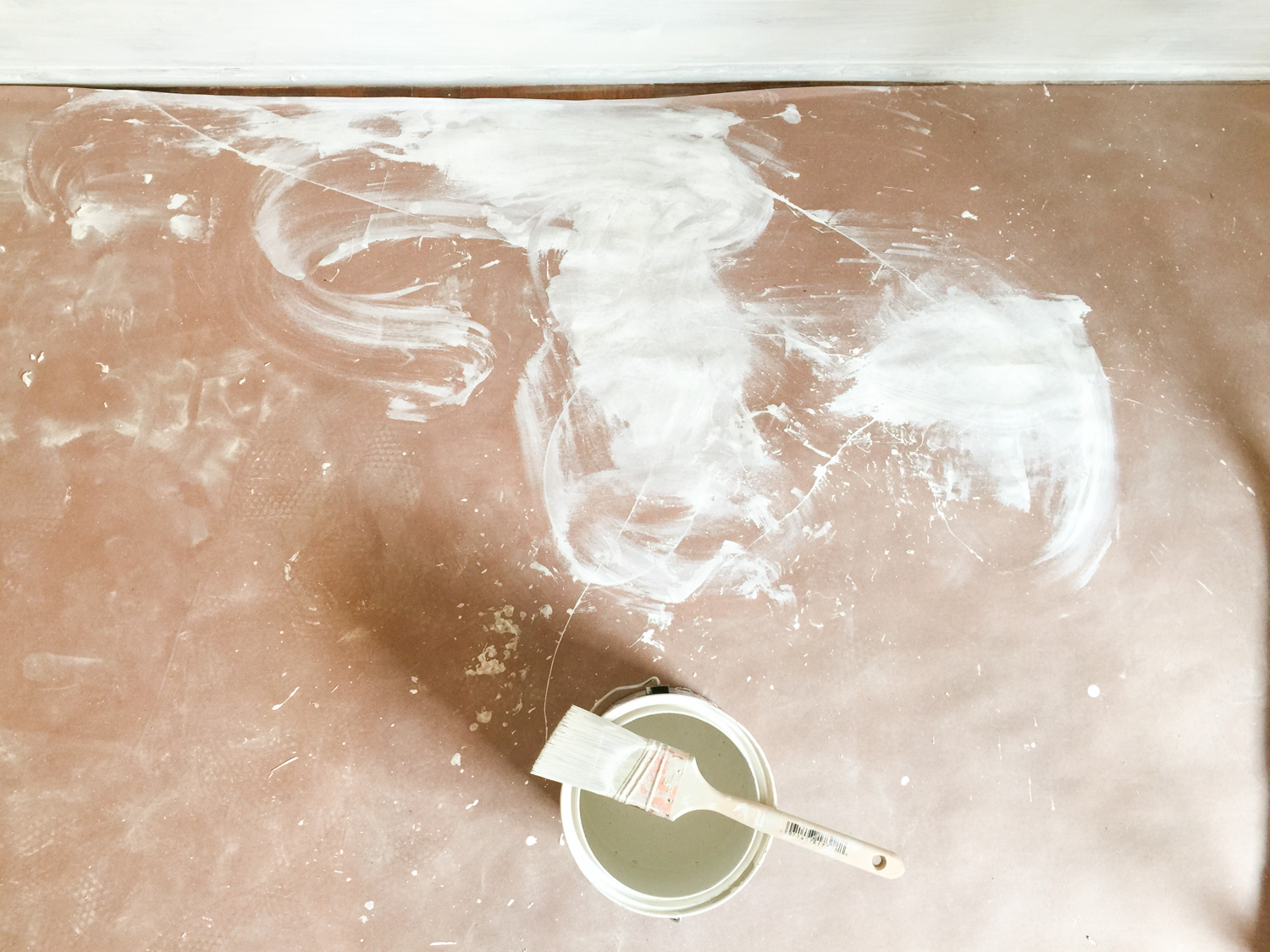
Oops. Thank goodness for rosin paper. Once I was done spilling paint, the sanding process could begin.

That freshly sanded oak makes my heart skip a beat! I also have a crush on this sander. Ain't she a beaut? Looking back, I think that retro pale green influenced my kitchen cabinet color.

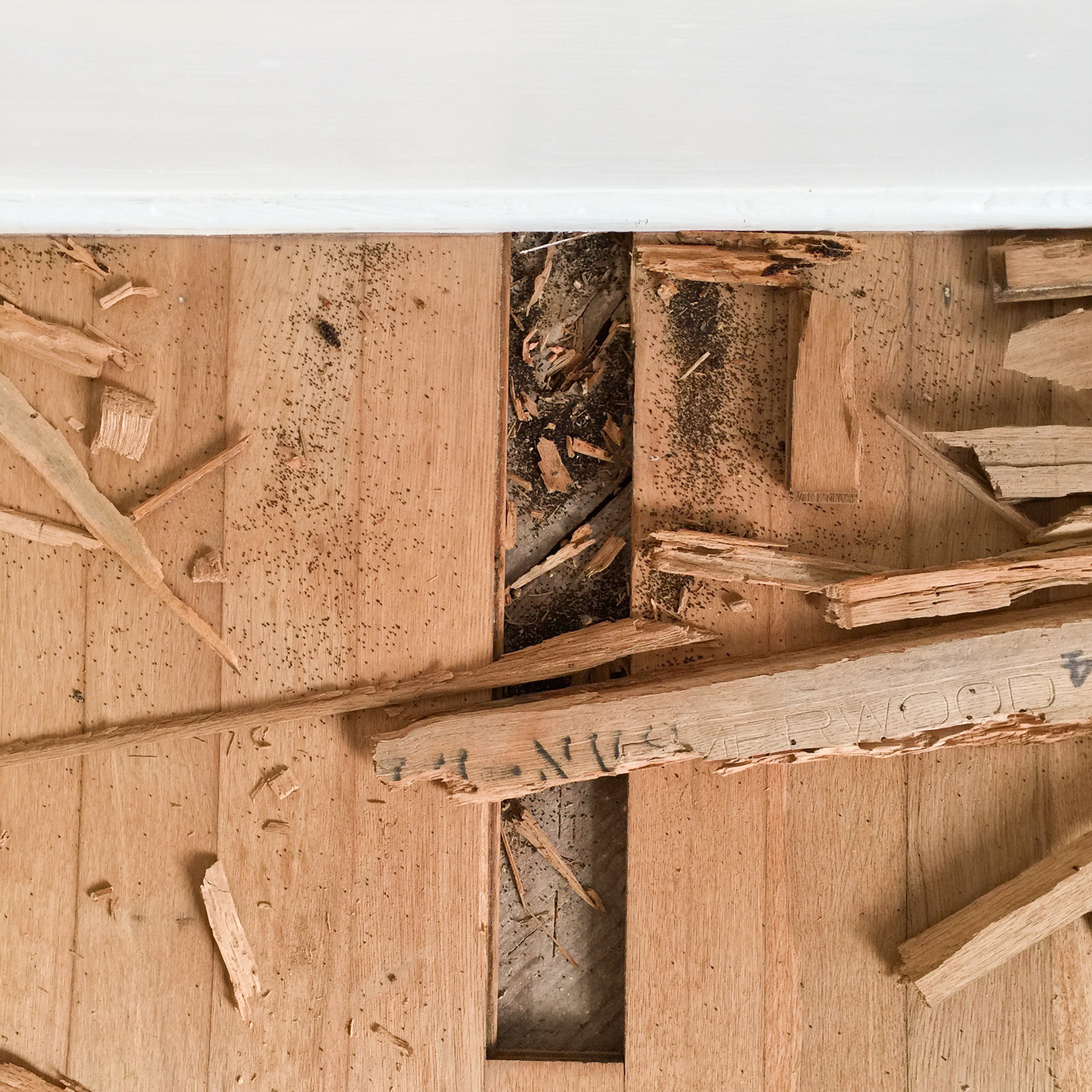
The floors had previously been refinished, but in the back of the closets was the original wax finish. It was pretty dull, but there's something so special about finding a part of the house that hadn't been messed with over the years - even if its a small bit of dingy flooring. Below, you can see the wax finish transition to the glossy polyurethane before getting sanded down. Also, note the termite damage.

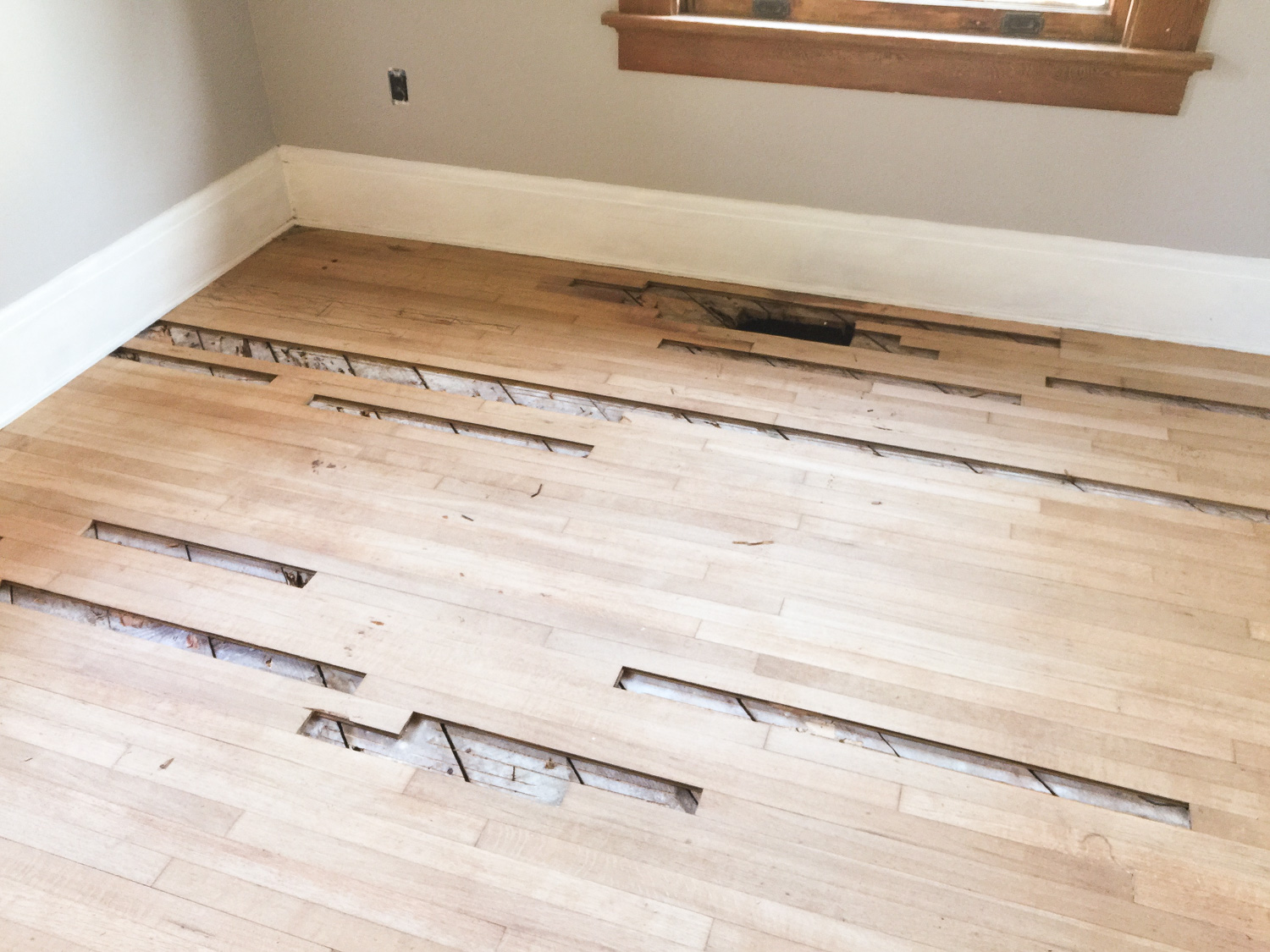
All of the boards that were brittle from termites gnawing on them had to be replaced.

It's no surprise to find a few boards that are beyond repair, but the bummer was discovering that termites had eaten through the subfloor, too. It was so chewed on that I could easily poke my finger straight through to the crawl space. Half of the master bedroom flooring had to go. This is where I can't stress enough the importance of house maintenance. This back corner of the house was termite heaven because of the moisture that built up in a non-vented crawl space. There's also no record of termite treatments after 1982. People, these are BUGS inside of your floors/walls/furniture/etc. Get them out before they do this!

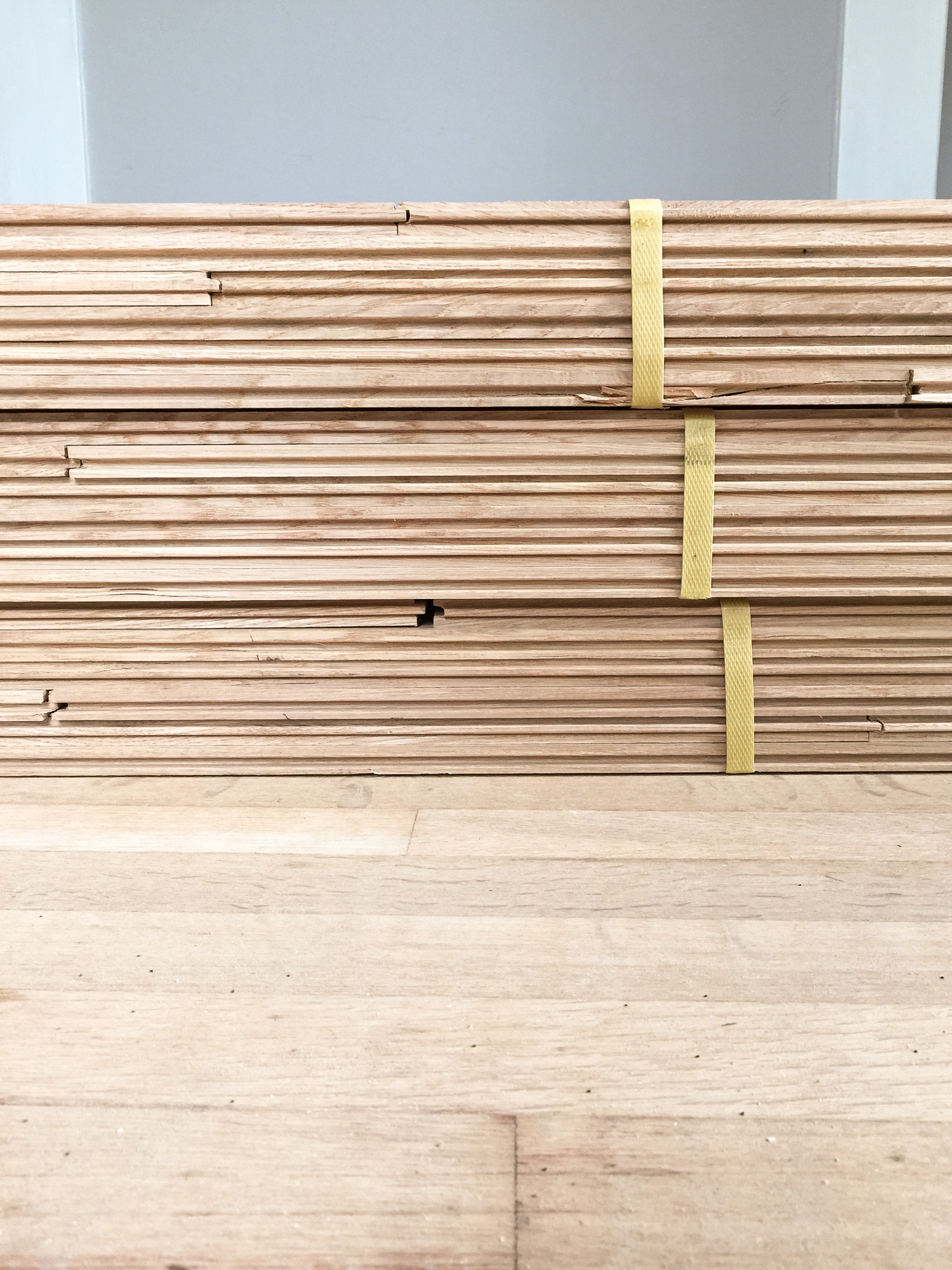
Local suppliers were out of the same type of flooring we have (2” x 1/2” rift and quartersawn white oak) and tried to convince us to use plain/flatsawn wood. We insisted on using the same type of cut as the existing flooring, and even though it delayed our move-in date, it was well worth the wait. Once the matching hardwood arrived, it had to acclimate to match the house's humidity.

During the acclimation time, we brainstormed how to finish the floors. The sanding did wonders for the small stains and scuffs, but the urine damage was still noticeable and would stand out even more when coated in polyurethane.

I was prepared to stain the wood a dark shade in order to hide the stains. But at the last minute, Ross made his biggest design contribution to date - he declared, "no stain!"

The ghosts of urine blemishes remain, but we couldn't be happier with the choice to keep the white oak light and natural.

After an application of wood putty and another few rounds of sanding, the floors were coated in an oil-based satin polyurethane. The finish is just shiny enough without being glossy, and its amber tones add to the patina of the 100-year-old wood. Choosing to do oil-based was in my goal of keeping with the history of the house - giving it the warm amber look and using finishes customary from years ago. But I kind of which we didn’t do the oil based poly and instead left the wood even more pure in it’s lighter hue. It’s okay, though!

We hired out the project and spent about $5k on the whole process. It was well worth it considering we were in a rush to move in and had lots of other things going on. But, I do yearn for the day when I can refinish floors myself! The Grit and Polish shared how they refinished their floors themselves and included the cost to do so here.

Once the flooring was complete, it felt like a whole new space - almost ready to be lived in. But before moved-in, there was still so much more to do. Which of those projects do you want to hear about next? The bathroom remodel? The kitchen update? More odds-and ends?

Weekly Roundup

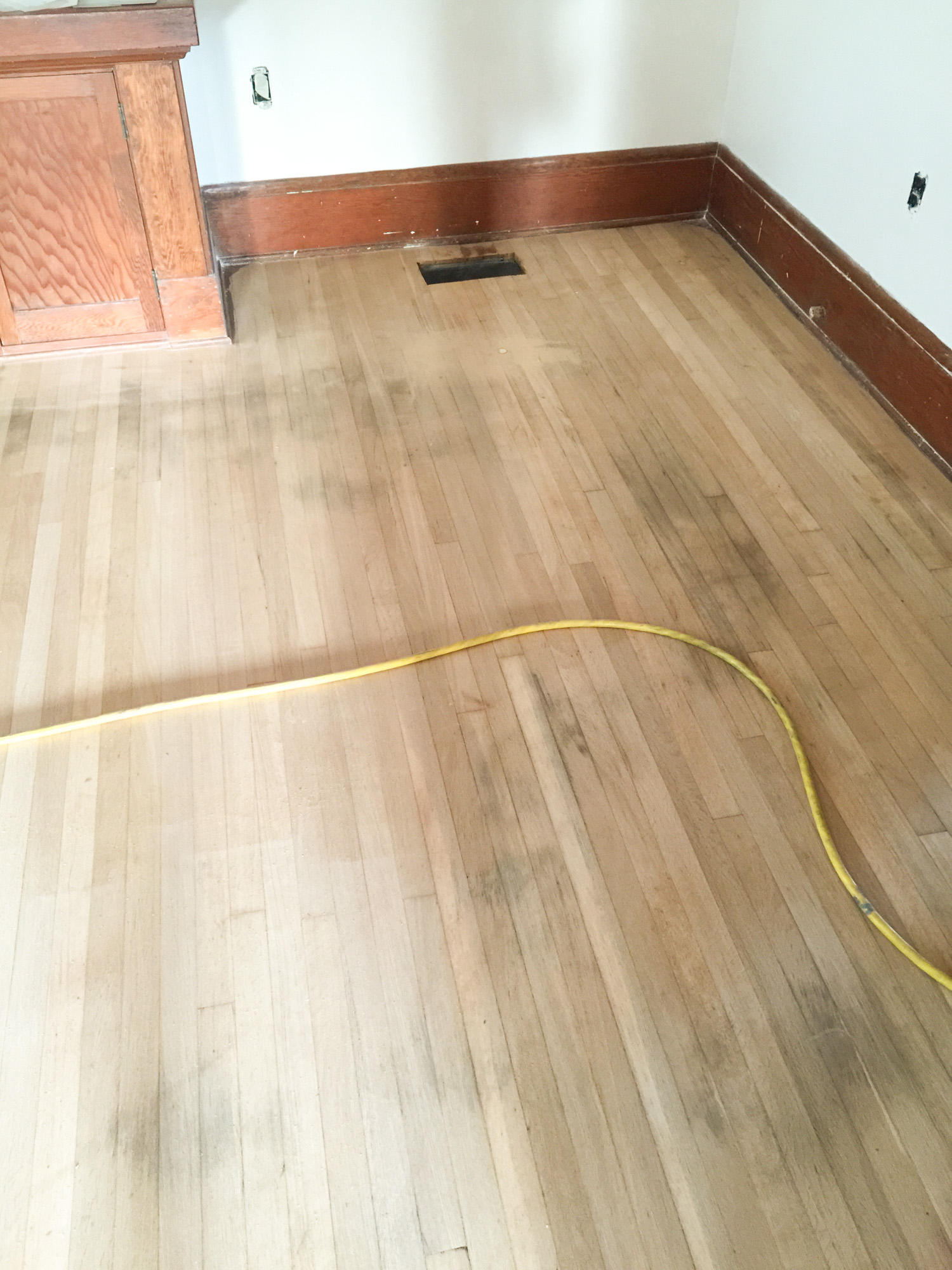
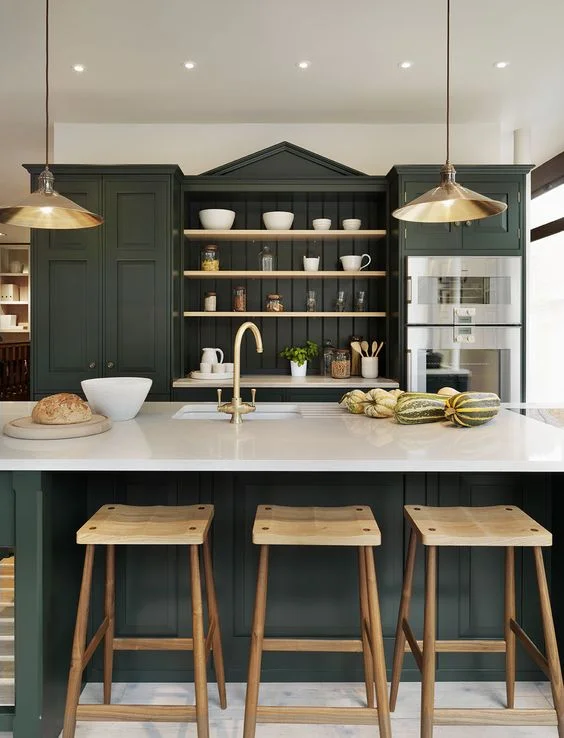
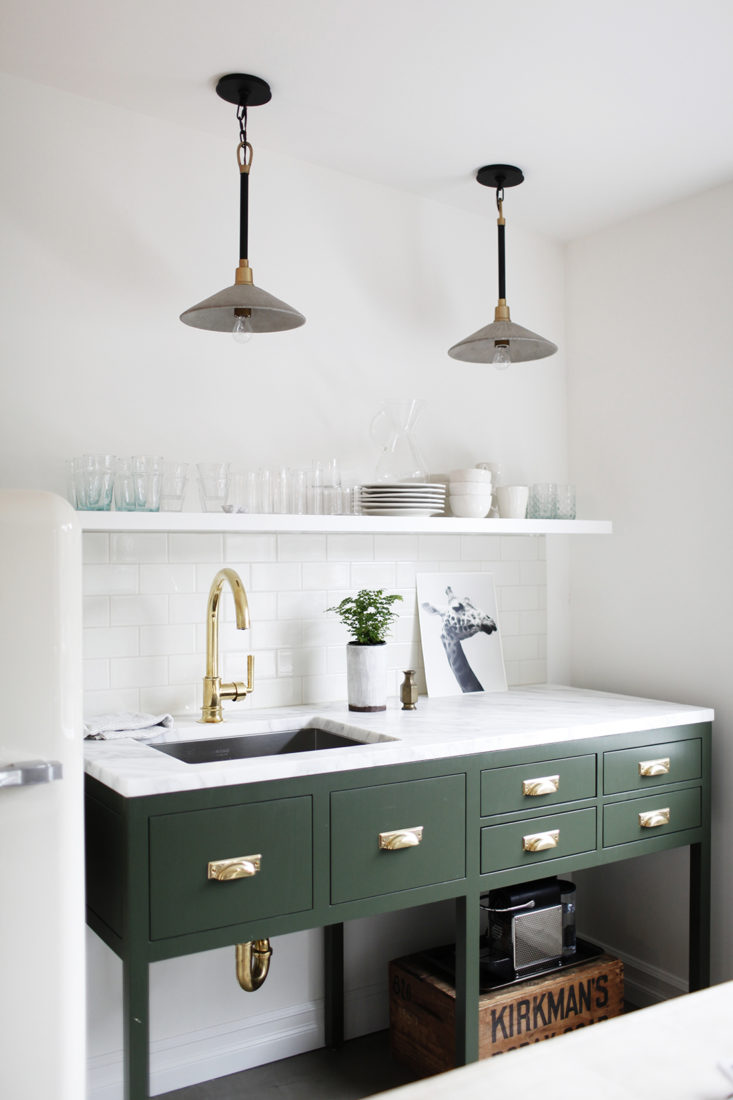
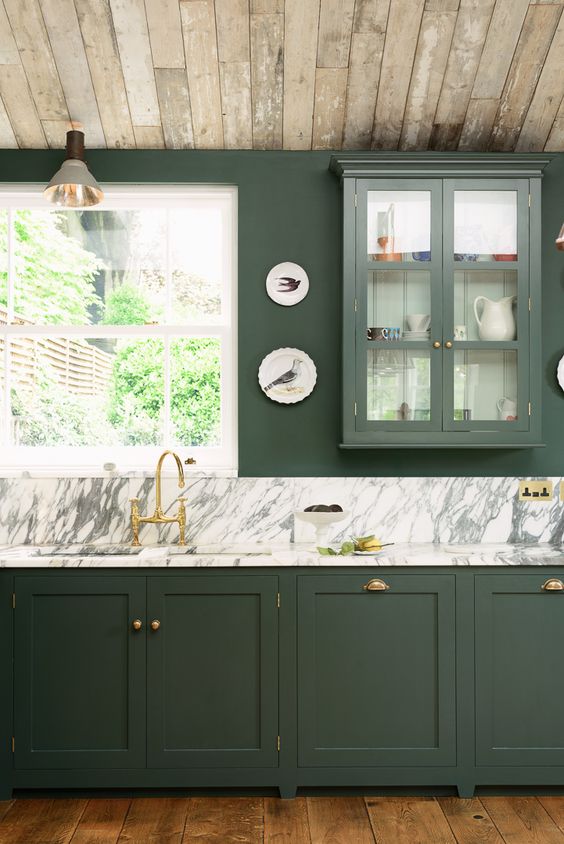
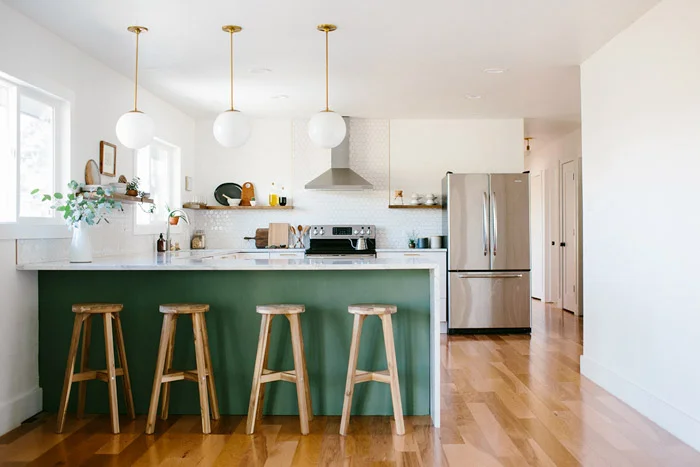
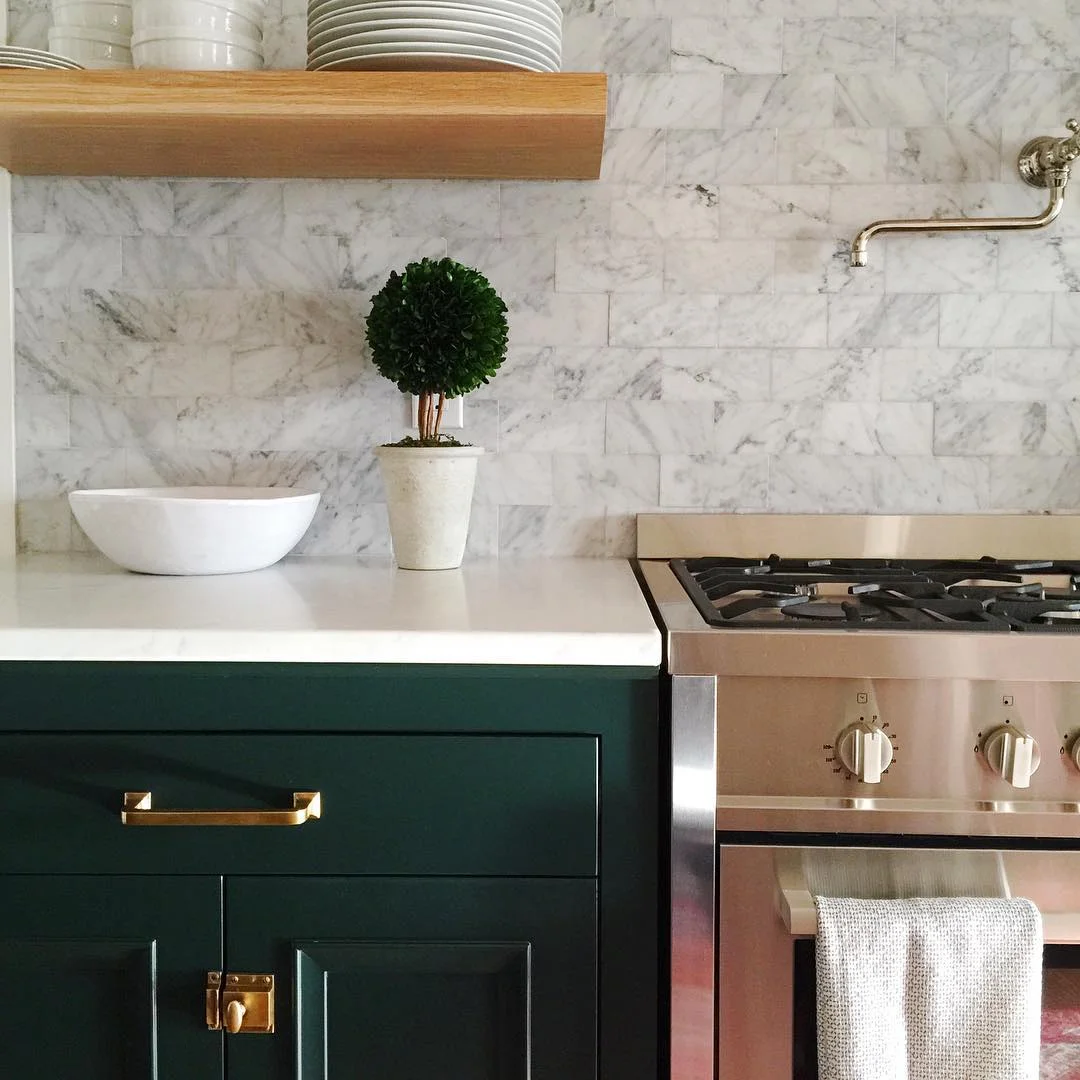
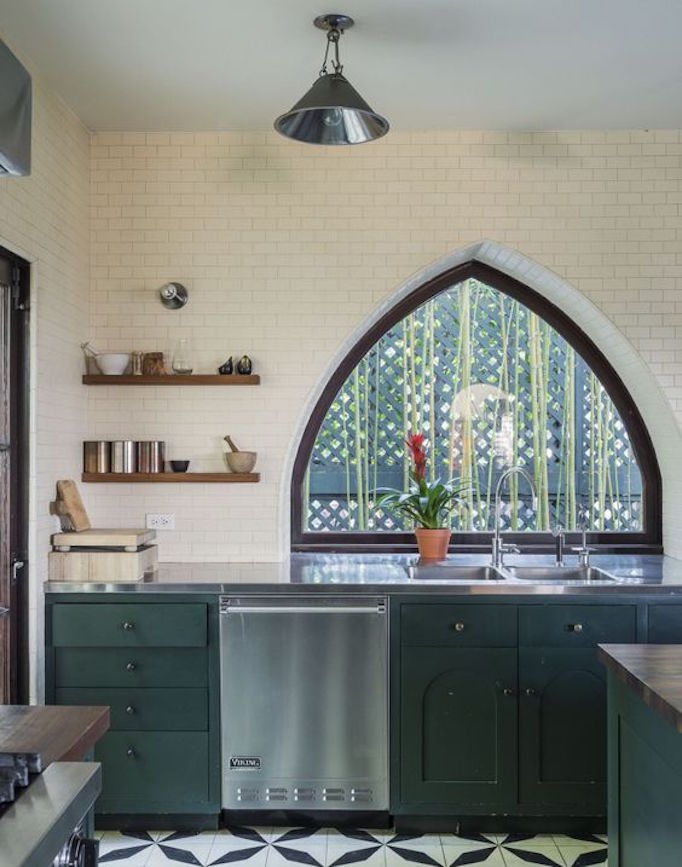
Happy St. Patrick's Day! In the spirt of the holiday, I want to paint the kitchen green. We've enjoyed the pale teal cabinets for a couple of years, but I'm itching for a more moody color like these kitchens.

Sources 1/2/3/4/5/6

What do you think? Green uppers or white uppers? Super dark green or blueish green? Should I even repaint again?

Speaking of moody, I'm swooning over this foyer designed by Casework and hand painted by Michael Paulus.

I'm thinking of scheduling future vacations around these notable museum openings around the country. If you're in Washington, please go to Yayoi Kusama's Infinity Mirror Rooms on my behalf.

A friend is designing a new construction house for a client and while she was out of town I went to the job site as her stand-in and to photograph the space. I may love old houses, but I think this new one is pretty spiffy too.

I'm far from perfect at grammar, but I have a pretty strong opinion about the Oxford comma - I love it. I feel validated knowing that a lack of a comma can lose court cases

A few of my favorite TV shows came back recently so I'm binging on Love and anxiously awaiting more of The Americans. What else should I be watching?

As a lover of eating and making pies, I'm disappointed that I forgot about Pi Day on Wednesday! Luckily, Jeran of Oleander and Palm reminded me of her peach thyme hand pies so I can't wait to celebrate a belated Pi Day over the weekend with this recipe.

Did you see my post earlier this week on refinishing plaster walls and what I think sloths have to do with old walls? Here's another adorable sloth video - the guy in the hanging chair is my spirit animal.

Happy Friday!

Wall Redux

Before I get into why the walls needed repair (other than to remedy the smell), I'll kick off with some old house wall 101 on plaster and lath, which is a common construction for lots of American homes at the turn of the century. There are so many other great resources that cover other wall materials and styles such as gypsum board, shiplap, etc. Turn to Chip and Joanna for all things shiplap, and refer to This Old House for all things old homes.

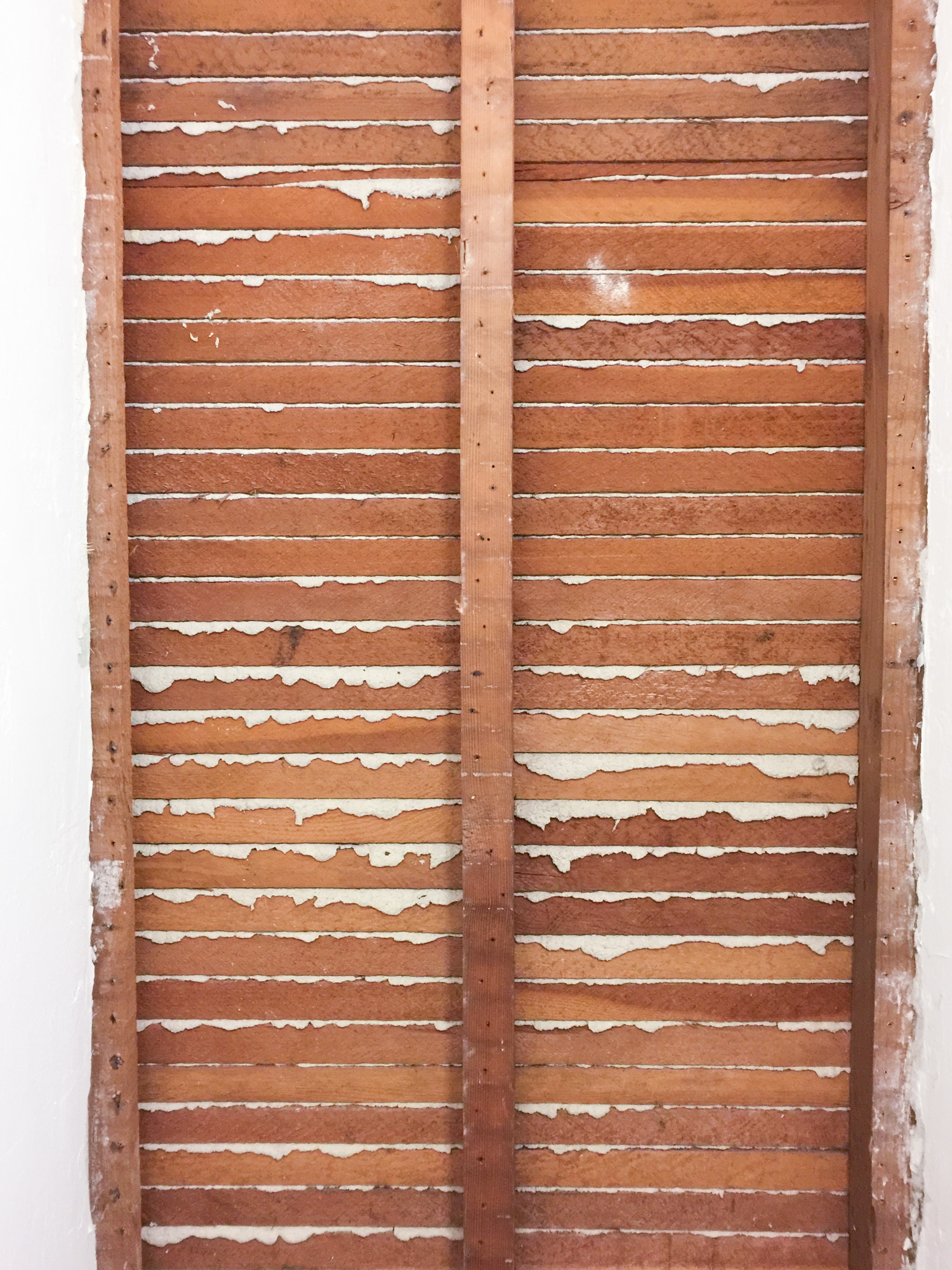
Wood laths are strips of wood about an inch tall that are installed horizontally and attached to the wall studs with small gaps between each strip. The plaster is then coated over the lath with a trowel and pressed into the lath until the plaster oozes between the gaps and hooks onto the back side of the lath. Imagine sloth fingers hooked over the edge of a bucket. The funny looking fingers are the plaster and the rim of the bucket is the lath. Did you click that link and "accidentally" watch 45 minutes of sloth videos? I sure did. Let's get back to the walls. This is what the back of a plaster and lath wall looks like. See the sloth fingers?

Once the plaster hardens and gets a few finishing coats, you have a wall! This construction has many perks adored by old house lovers. Unlike modern-day drywall, plaster and lath is quite thick and therefore is a great sound barrier and provides decent insulation. I particularly love how it feels more solid than drywall. It feels substantial and does nice things for the room's acoustics. When Daniel of Manhattan Nest reworked the walls in his bedroom, he doubled up two layers of 1/2" drywall to mimic the goodness of a thick plaster wall. He gets me.

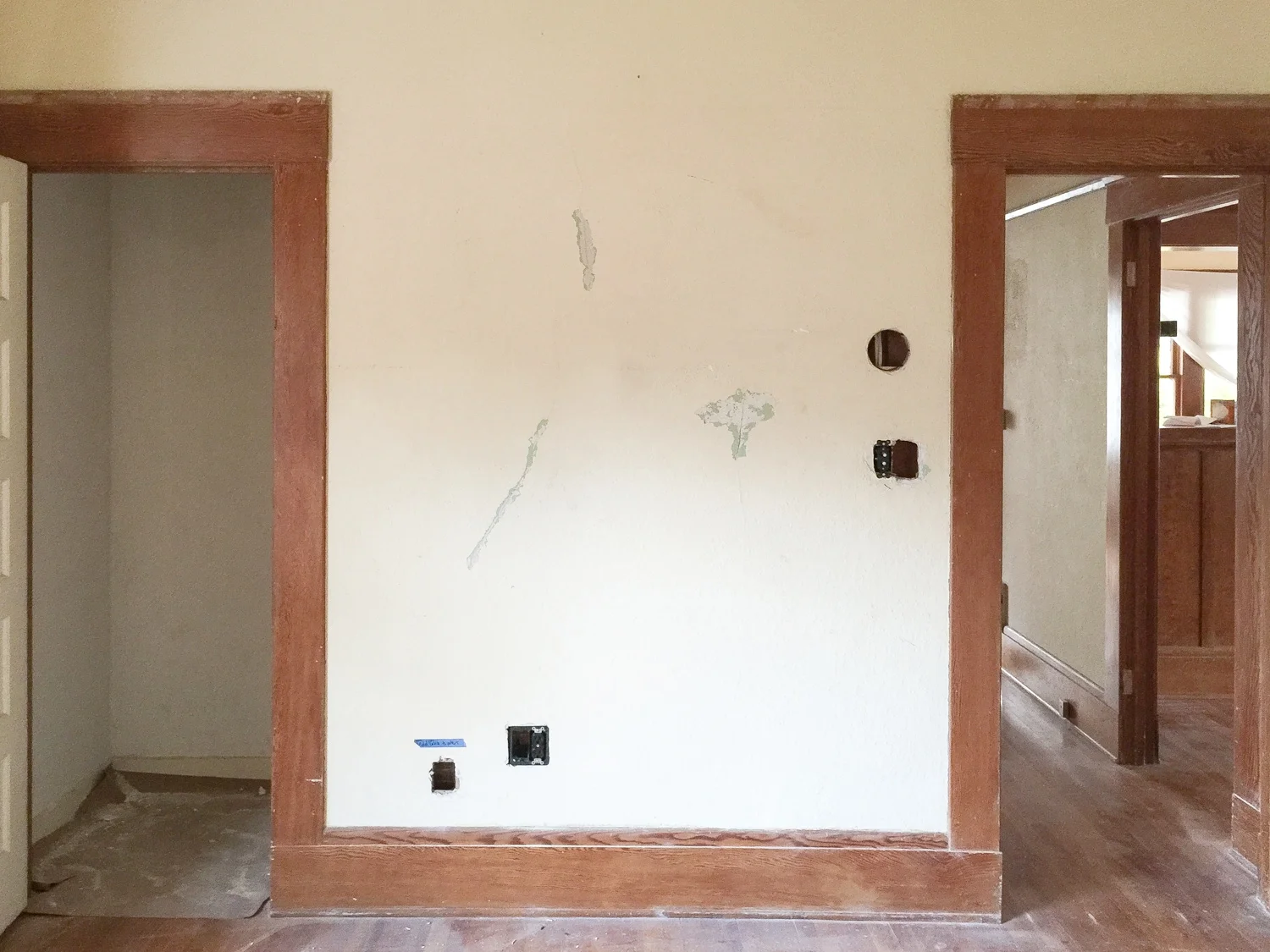
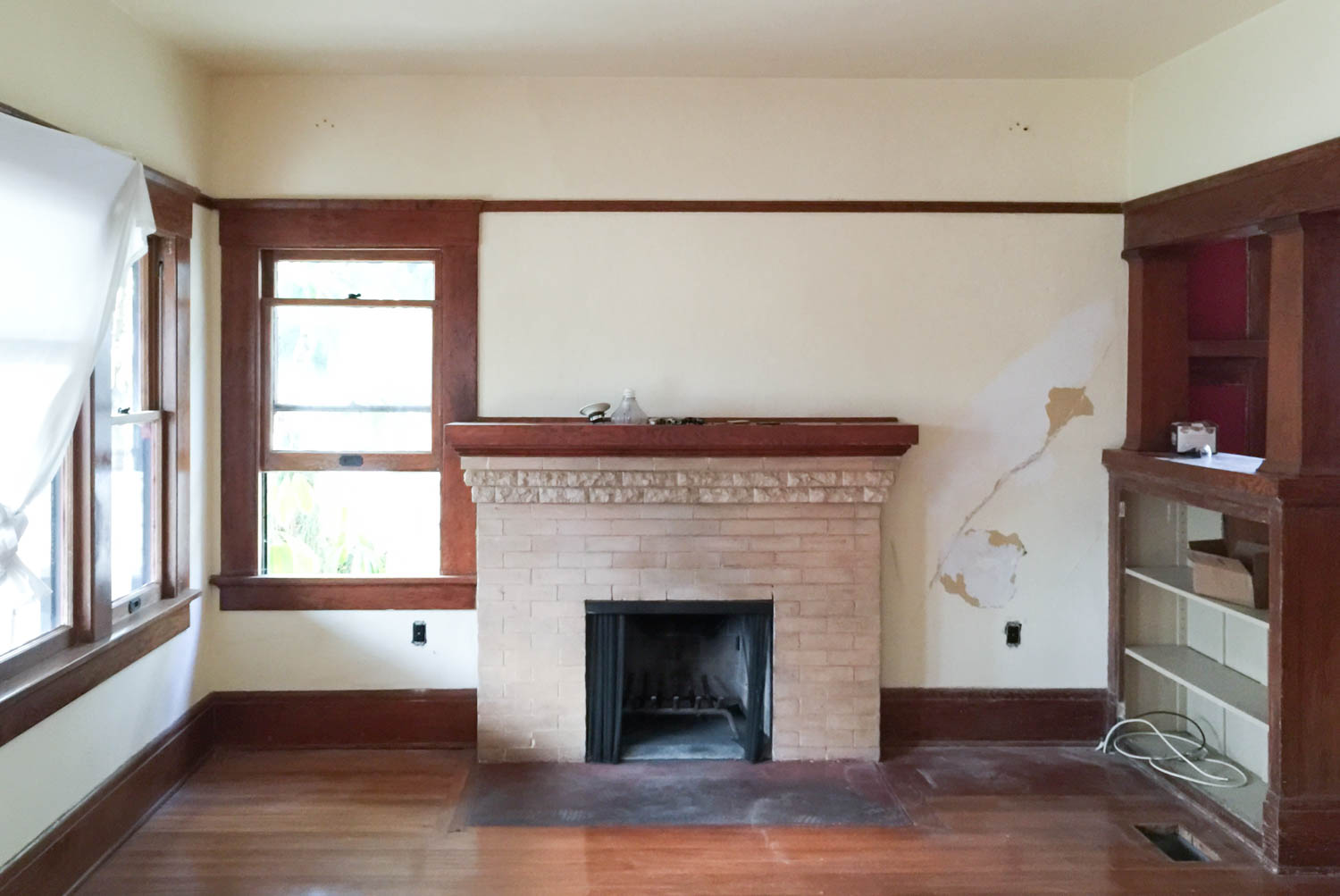
All this is to say, I love my plaster walls, and would much rather repair them than replace them. The bummer with plaster is that after a few California earthquakes and 100 years of the house settling, the plaster can crack and even pull away from the lath. We had this issue in several spots, plus some pretty bad patch jobs, and lots of chipping.

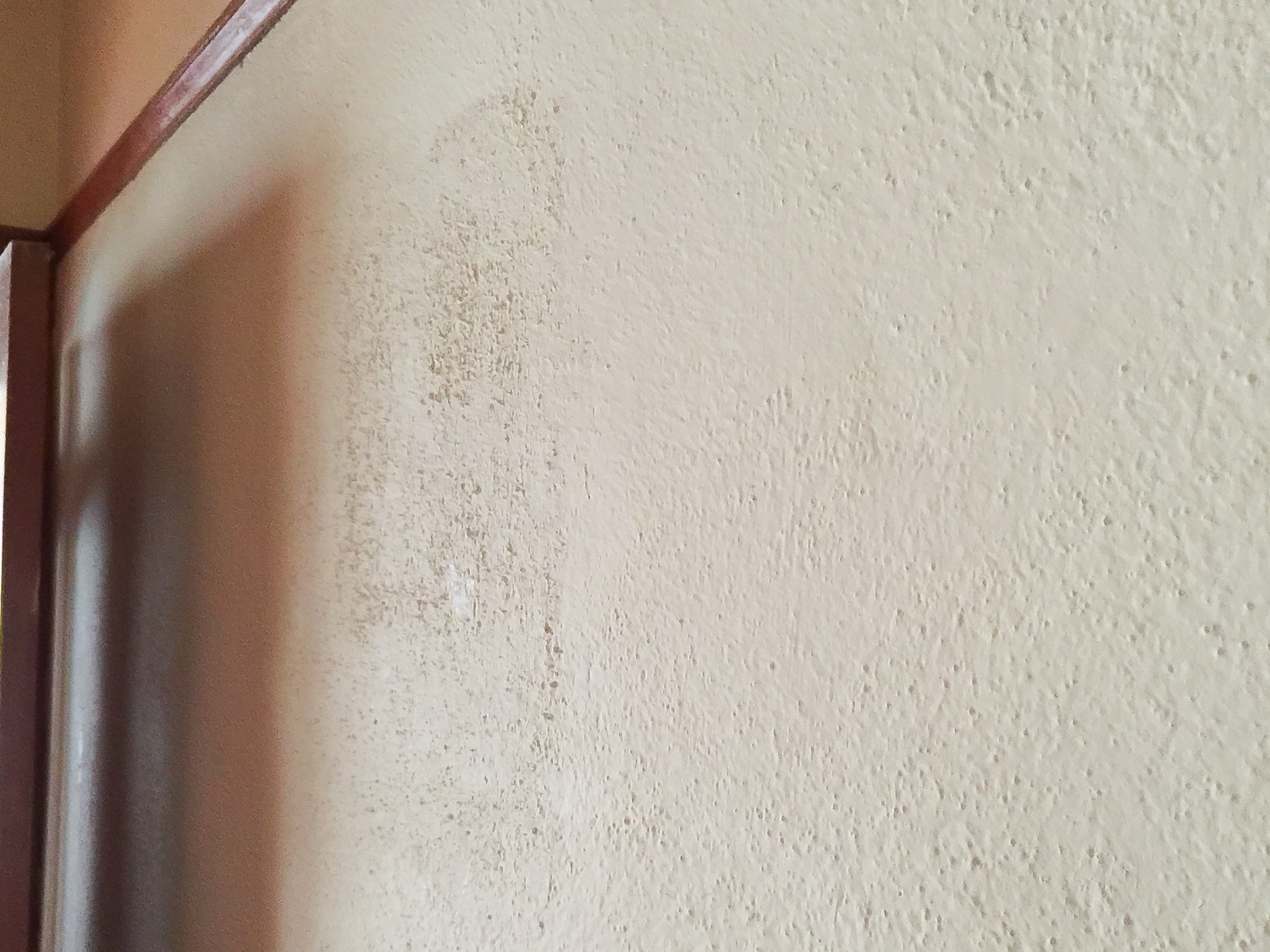
The original texture was really sandy, and the previous attempts at patches were like extra coarse grit sandpaper. I was told this wall texture was created by grinding up walnuts and incorporating them into the plaster mix. The walnut consistency wasn't my ideal surface, but the old house purist in me felt we needed to keep that original texture. Once we determined that the best way to get rid of the smell was to skim coat the walls, I was glad to be able to replace the walnut walls with a smoother finish. 

Remember when I mentioned the phenomenon of "well, if we're going to do that, we might as well do this?" Well, I did it again. Since we knew the walls and ceilings were about to earn a beautiful new coating of texture and new paint, it was the perfect time to tear them open. Enter: electrical.

Here's my brief old house electrical 101: Knob and tube wiring is a pretty interesting technology made up of ceramic pieces that route the electrical wire through the walls. However, this type of wiring isn't grounded, and often can't handle modern appliances and electrical needs. This, plus the potential of a fire hazard makes this a feared technology - so much so that many home insurance companies will charge more if your house has even a little bit of this outdated wiring system. Old houses get a pretty bad rap for their old wiring, but many operate with knob and tube just fine. Our house was 90% K&T, with the other 10% being really poorly spliced additions that were more dangerous than the original electrical. The shoddy modifications and the lack of sufficient outlets led us to redo all of the electrical. 

Running new electrical through existing walls is some sort of magic trick that electricians humbly do for you. Through their sorcery, they manage to run new wires throughout the entire house and only leave a few holes behind.

Because I'm (sometimes) an old house purist, I knew that if we had to cover up the original plaster, I wanted to be sure that it was recoated with old fashioned plaster. That is until I got bids that cost as much as a Toyota Corolla. So, I changed my tune and decided that a thin coating of drywall mud would suffice.

I called a few old house neighbors to ask them for referrals to retexture all of the walls. A block away lived an older gal named Holly who when asked for a referral replied, "Are you home now? I'll be right over." No more than 12 minutes later Holly was waltzing through my front door with a paper bag full of her preferred drywall tools: a trowel, a taping knife, a mud pan, joint tape, a multipurpose tool, and joint compound. (I'd also recommend a hawk, but it bothers her wrist). Without hesitation, she took the pointy end of her multipurpose tool and carved a gash in the living room wall along the seam of the major crack. She narrated her process of cutting a v-shaped crevice in the line of the crack which would provide more surface area for the new compound to adhere to. She then filled in the crack with joint compound, layered it with joint tape, then smoothed it over with more joint compound.

With the gash in my wall and the tutorial from a woman that restored her house with her own hands, I was inspired and confident that I could retexture the walls on my own. So, I started scraping anything that was lose, and began carving into the cracks.

That multitool (seen above) was a dream. It was able to dislodge any loose pieces and I could carve into the plaster easily. The scraping process was cathartic and I even managed to get a few family members to scrape the walls with me. Thanks, guys! With Holly's confidence in me and that tool, we scraped, and scraped, and scraped until the walls looked like this.

I'd say it's finished - if I were going for a medieval French chateau look.

The process of scraping one whole room was very time-consuming, and my hands were beaten up after scraping against the sandpaper walls. (I know, gloves. Live and learn!) I was losing patience with the scraping and decided to tackle the retexturing process. Since I was just starting out, I kicked off my hours of retexturing in the closet where I could experiment with different techniques without care of how my clothes would judge my inevitable mistakes.

The process is quite simple once you get the hang of the wrist movements. I used Holly's recommended mud pan and a small putty knife to fill the big holes and cracks, then layered them with fiberglass mesh tape to add strength that would prevent cracking again. Once everything was patched, I used a trowel to scrape the walls so I could knock down any high peaks in the texture. Then, I used the joint compound mixed with a touch of water to coat a layer over all surfaces. The idea was to use enough mud to fill in all of the valleys in the texture to bring the recessed portions to the height of the peaks but not so much that you're caking everything with an inch of drywall. I worked in the closets late at night so I lost track of time and the ability to judge the quality of my work, but I'd say it turned out pretty nicely - for a closet.

I really enjoyed working with the drywall mud but I was losing energy. I was retexturing walls while also doing lots of other projects on the must do before move-in list and I wasn't moving as quickly as I hoped. The wall texturing was necessary to complete before the floor refinishing, so I was risking slowing down the progress of the rest of the renovations. So, we hired it out, and I'm so glad we did. It was completed perfectly by the pros, freed up my time to work on other projects, and ensured that all wall surfaces were completely covered up and free of smells.

The crew skim coated everything in a very light skip trowel texture to make the walls almost completely smooth. The ceilings had their fair share of cracks, and due to the horizontal nature of ceilings, they tend to crack perpetually. To prevent this, the ceilings earned fresh pieces of drywall that won't crack or peel.

dining-retexture.jpg

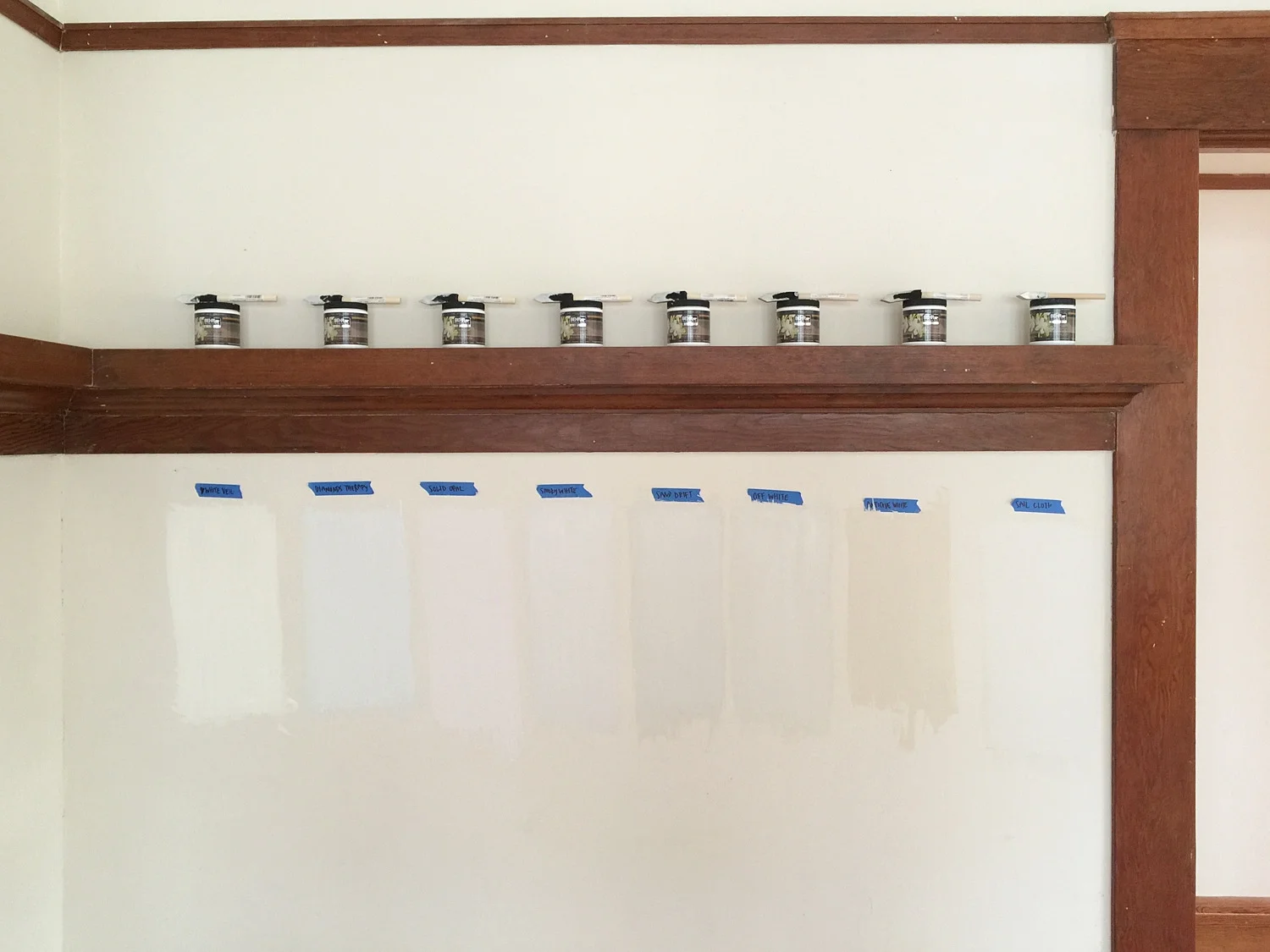
Once the crew was done, the walls needed to dry out, then they got a healthy coating of primer, then paint. Picking a paint color is always tricky, and white is a particularly easy color to mess up. Take these paint samples below. They all looked white on the swatches, but when compared to each other, their undertones pop and it's easy to see which ones are too blue, pink, and brown.

After the walls got a fresh skim coat of new drywall mud, I started to fancy their new hue and found myself color matching to the drywall color. Thus, we selected the swatch on the far right, Sail Cloth by Behr. With my time freed up not doing the drywall install, I was able to paint all of the ceilings and walls before move in with the help of my mom. Thanks, mom!

Why our house smelled, and what we did about it

Well, we bought the house we dreamed of! A house in our ideal neighborhood, with great flow, oozing with charm, and full of lots and lots and lots of projects to keep me busy. We knew that certain projects would be way easier to do before we moved in, and the odor issue was at the top of our list:

  • Remedy the odor issue

  • Patch and paint the walls

  • Refinish the floors

  • Refresh the kitchen

  • Gut and remodel the bathroom

  • Tent the house for termites

  • Tidy the front yard

  • Clean, clean, and clean

The smells of pet urine and cigar smoke were so intolerable that when we first showed the house to family, my father-in-law couldn't stand in the house - literally. My love for the potential of the home was mired in having to defend our decision to buy a fixer-upper. Family members weren't the only ones needing convincing - I was feeling deflated after reading horror stories of people buying smelly houses and being unable to remedy the odor. I kept myself up at night worrying about what we would do if we were unable to get rid of the stench. All I could do was try various methods to get it out.

Method 1: Open the windows and douse with vinegar

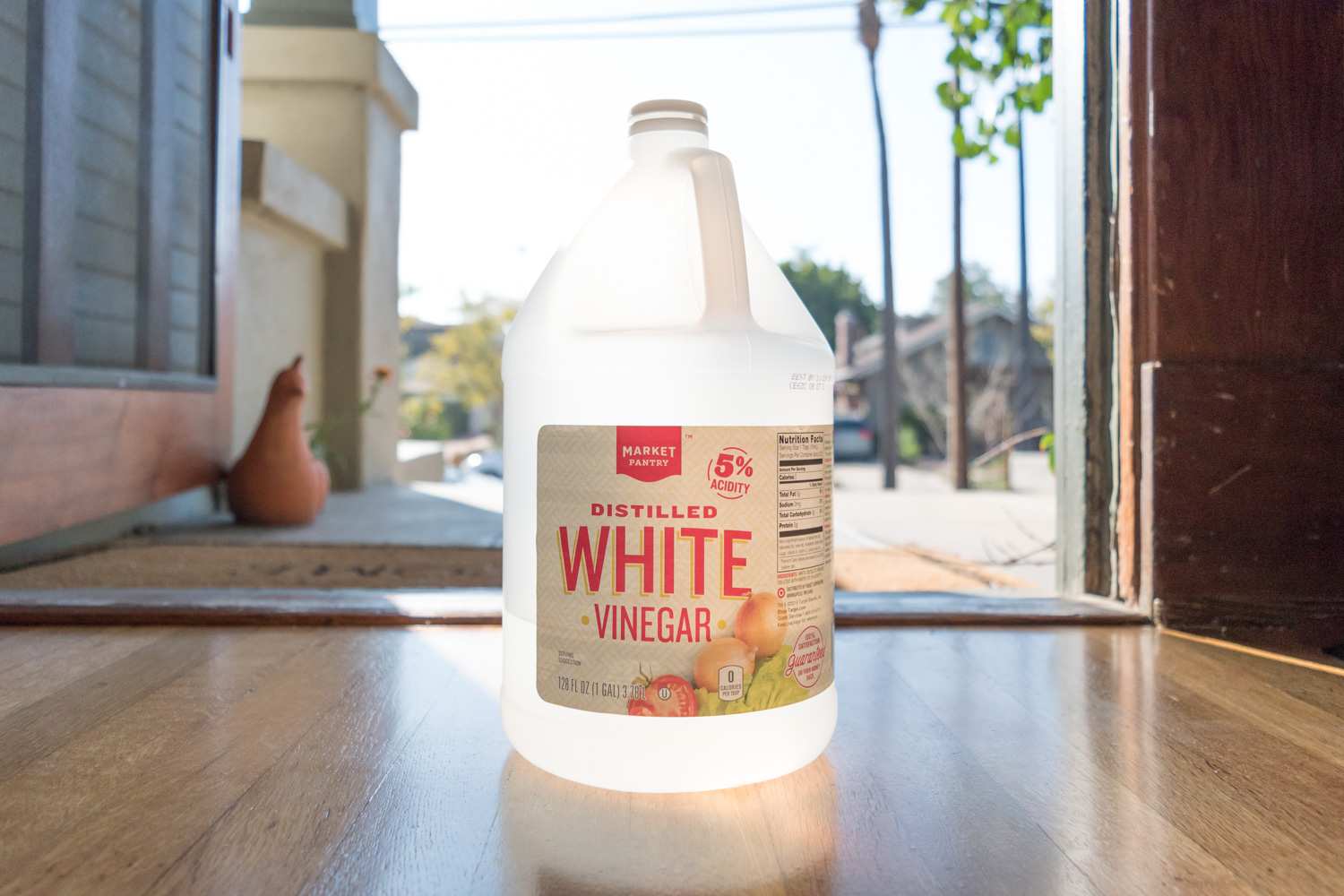
The poor house didn't seem to get much cross ventilation in the years before we rescued it. Leaving the windows open for days gave the interior a much-needed breath of fresh air. Clean air helped, but vinegar helped out even more. 

Each room earned its own tray of vinegar to help waft the magical cleaning solution around the house as the breeze blew in. The acidic vinegar smell helped reduce the urine odor while at the same time made the house smell like Easter eggs and an Italian side salad. Both of which I'll take any day over pet urine.

I stumbled upon a website that boasts thousands of ways to use vinegar. I mean it, the stuff is magical! Vinegar is one of my favorite cleaning products; it works like a charm, and it's a non-toxic alternative to the other chemical-heavy products on the market. Dish soap and Bar Keepers Friend were also perpetually in my shopping cart as we burned through those cleaners. I still can't live without Bar Keepers Friend. If you ever wonder what to get me for a birthday gift, I'll take a 4-pack of that wonderfully non-abrasive cleanser. Several people (read: the internet) recommended cleaning with TSP. I took their advice, but I've since regretted it after learning how toxic it is. I'm sure there are good reasons to use TSP but do your research first.

Method 2: Clean everything that won't get a full refinish

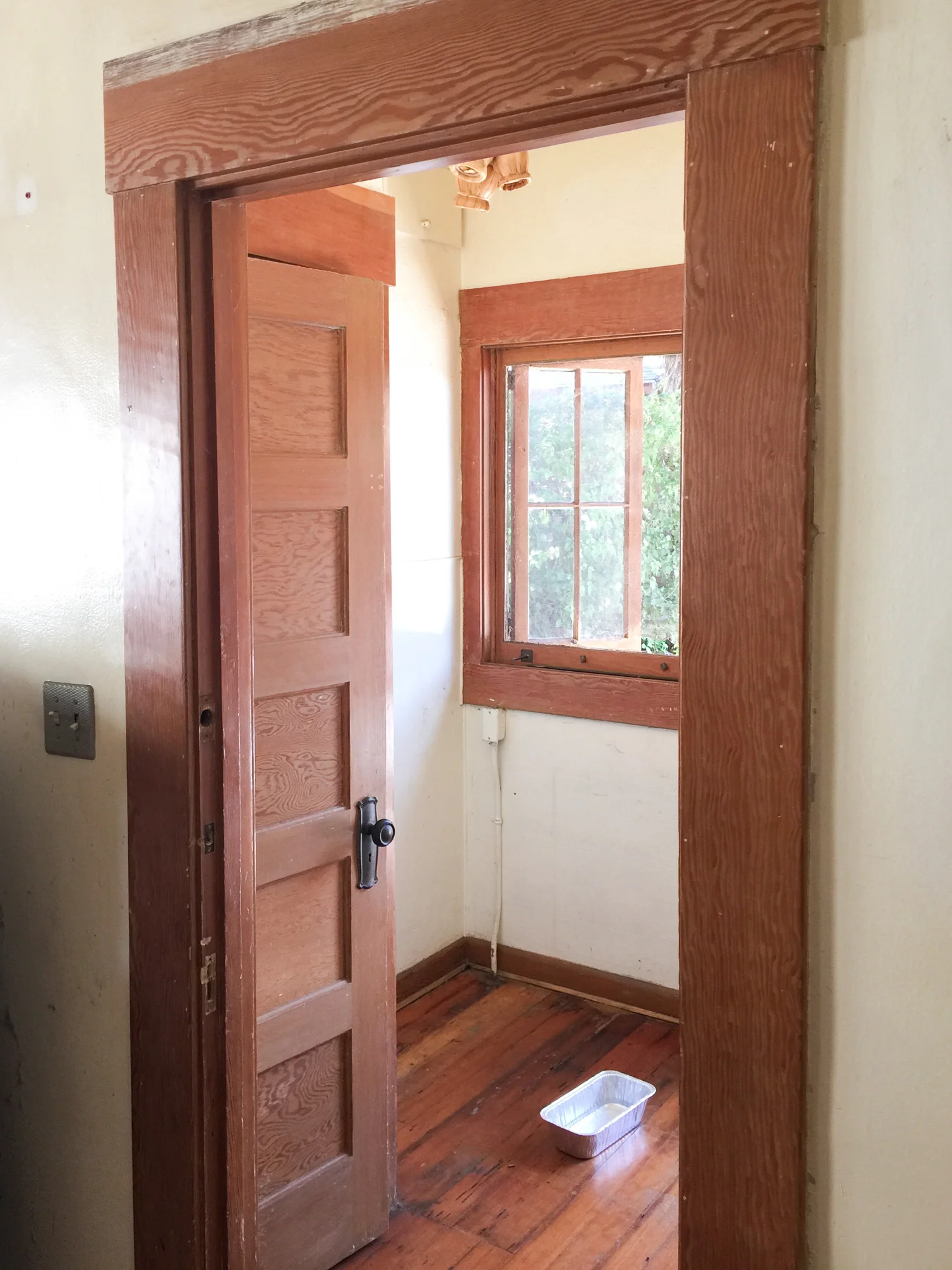
The douglas fir woodwork throughout the house is what first attracted me. I love the natural wood and can't wait to give it a thorough restoration one day. Yet, a full refurbish wasn't high on the priority list, so the trim got a good cleaning of all the grime it acquired over the years. My dearest mother spent a week visiting the house while I was at work to help clean all of the nooks and crannies of the millwork. Thanks, mom! We were also sure to clean doorknobs, light switches, window hardware, and windows.

Method 3: Cover up porous surfaces

So, we cleaned the air, the woodwork, and the hardware. Remaining are two of the most plentiful materials in the house: plaster (walls) and more wood (floors). Both are quite absorbent so a wipe down wasn't going to remedy the odor issue enough.

Sometimes a heavy coat of paint will mask odors, sometimes primer and paint will do the trick, but if they don't, you're stuck with smelly walls. The best solution is to recoat the walls with plaster or drywall, then prime, and paint. Since I wasn't taking any chances, and the walls were in need of patching anyway, this is the route we took. More on this later!

The hardwood floors absorbed not only the odors but also the actual culprit of the smells - pet urine. The only remedy for this is to sand off the protective varnish and a thin layer of the wood, then bleach and reseal the wood. Again, this what we did, but more on that later!

The kitchen earned its own coating of paint, polyurethane, concrete, and tile as well as its own scrubbing of surfaces. More on this later!

Maybe I should've named this post, "more on this later!"

Method 4: Clean out the HVAC

The above remedies cured the home of the smell, but we weren't done yet. A heating and cooling system is only as clean as the house was at its dirtiest. The filters that you replace every 3 months (you do replace your filters every 3 months, right?!) can only trap so much. After all of the dusty renovations were complete, and just before we moved in, we hired a company to clean all of the ductwork. They completed the cleaning, happily accepted my payment, then told me that the ducts were damaged and needed to be replaced. I wasn't surprised to hear the news, but since it was only for a heater (there was no AC) and we live in San Diego, I wasn't rushing to replace a system that we'd be using a mere three times a year. We moved in and carried on - until the house started to smell again. We came to realize the duct cleaning was ineffective, so the next step was to completely replace all of the ductwork and the furnace. We decided to take this opportunity to also add air conditioning - a welcomed respite from the sweltering summers. This was the first of many "well, if we're going to do this, we might as well do that, and those, and these."

After all of this, I'm happy to say the smells are gone. Whew! Next, I'll elaborate on those other projects I teased above.